Ready for a New Year pantry refresh? An organized pantry makes cooking dinner, grabbing a snack, and putting away groceries much easier.
With a setup that works for you, you can waste less food, save valuable time, and stop searching through every shelf for that one ingredient hiding somewhere.
This step by step guide breaks pantry organization into manageable pieces for any space, from a roomy walk in pantry to a single cabinet shelf.
Empty Pantry Space Step 1
Removing every item from the pantry gives the reset a fresh perspective. It also supports a clean start for the work ahead.
Start at the floor by sweeping or vacuuming it, then wipe the shelves and walls. Pay attention to the corners as you clean.
Look closely at the corners and the shelves as you assess the pantry. Check the lighting, along with the depth and height of each shelf, because these observations will inform the storage plan.
Pantry Purge Step 2
Assess the items before restocking the pantry. This helps you decide what belongs there and what does not.
Assess the unused ingredients, then donate or discard them. Expired items should be discarded with no exceptions.
Crushed tomatoes can be an overlooked ingredient, while coconut flour may sit unused. Marie Kondo is associated with ruthless decluttering, and overlooked ingredients may eventually become expired.
Unused items take up storage space, create waste, and increase cost. Keeping them in the pantry gives them room without giving you useful storage in return.
Grouped Pantry Supplies Step 3
Sort the remaining items into logical groups. Pantry organization works better when each item has a clear place within those groups.
Organized pantries should have category zones, with similar items kept together in their own areas.
Useful categories include oils and vinegars, canned foods, seasonal items, specialty items, drinks, snacks, baking supplies, grains and pastas, and sauces and condiments.
Dinner staples can go in a place that gives you quick access, while children’s snacks can stay within easy reach. You can also organize by use, grouping breakfast items, baking supplies, and dessert supplies together.

Pantry grouping should stay flexible, especially because strict separation may not fit in small pantries.
The pantry’s size and shape determine which grouping options work best. When space is limited, group items by how they fit on the shelves.
Pantry Space Analysis Before Containers Step 4
Assess the pantry’s function before purchasing containers. The way you use the pantry should guide the container choices.
At eye level, keep everyday essentials where they are easy to see and reach. Lower shelves suit heavy items such as flour and bulk cans, while upper shelves can hold specialty ingredients used only occasionally.

Use a tape measure to measure the shelves, and check the dimensions of each shelf before choosing containers. Those measurements give you the actual limits of the pantry.
Containers must fit the pantry space. Ill-fitting containers create incompatibility and can make the shelves harder to use.
Practical Storage Containers Step 5
The right containers can reduce work and make daily use easier. Practical choices should help with both tasks.
Decanting is one option for storing dry goods. It means moving those goods into containers instead of leaving everything in its original package.
In the pantry, matching containers can make flour, sugar, rice, pasta, nuts, and cereal easier to see and stack. Decanting these dry goods into matching containers can also support freshness.
Matching containers have high visual appeal, giving the stored items a consistent appearance.

Containers used for decanting need occasional deep cleaning, regular refilling, and proper labeling. Keep infrequently used goods in their original packaging, while frequently used goods can be decanted.
For items that are not decanted, use low-maintenance storage. This keeps those items in storage that does not require the upkeep of decanting containers.
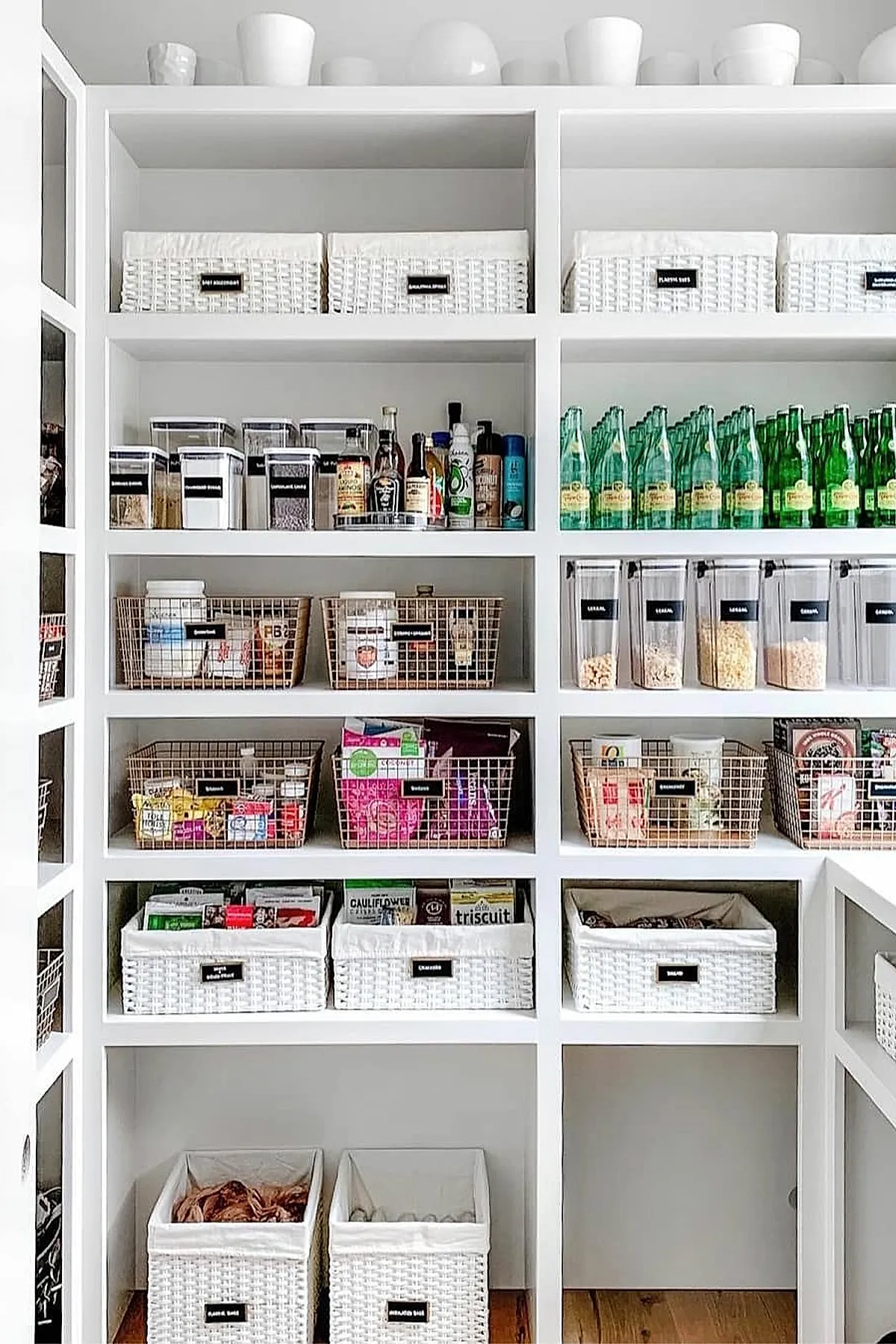
Clear bins can hold snacks, while wire bins hold irregular packages. Both types of bins support organization.
A Lazy Susan provides rotating storage for sauces and oils, making it suited to deep corners.
On tall or deep shelves, a shelf riser provides vertical storage for canned goods. It supports the cans by making better use of the shelf height.
Container selection varies by shelf size and food type. Wire containers and clear containers are recommended when visibility matters.
Test containers in the actual pantry, and buy varied sizes and styles if your budget allows. Trial purchases can be returned when the containers are unsuitable.
Pantry Zones and Container Placement Step 6
Place the empty containers in the pantry before filling them. This lets you set up the storage arrangement first.
Adjust the container positions and spacing on the shelves. Keep frequently used items within easy reach.

In the bins and on the shelves, leave some spare capacity instead of packing every space full. The extra room makes restocking easier.
A crowded pantry complicates new-item storage. Even one new item, such as new pasta, can be difficult to place when there is no room.
Pantry Container Labeling Step 7

Pantry labels identify where each item belongs, which makes shared upkeep easier. Everyone can see the item locations and help keep the pantry tidy.
As pantry contents change over time, reusable labels can change with them. Easy-to-read labels are more useful for everyday functionality than fancy labels, so keep the labels simple.
Container Filling Layout Adjustment Step 8
Fill the containers after placing them, so the filled containers form a functional system instead of a collection of decorative bins.

Around the shelves, assess the layout logic and how easily each item can be reached. Make small adjustments so the pantry layout aligns with both snacking habits and cooking habits.
A pantry should be functional, not just organized in appearance.
A functional pantry can make opening it feel easier and more pleasant.
Spice Organization for Pantry 9
Pantry spice storage can use a dedicated system separate from storage in the stove cabinet.
A lazy Susan holds spice jars, and you can spin it to find the spices you need.

A vertical wall-mounted rack stores spices while freeing shelf space.
Arrange the spices in loose alphabetical order. It supports quick retrieval and is easier to maintain than trying to keep everything in perfect order.
In trays or drawers, label the tops of the spice jars. Top labels support spice identification without requiring you to lift every jar.
Organized Pantry Maintenance Step 10
Even a simple pantry system requires ongoing maintenance.

In the pantry, remove expired items and do a monthly sweep. As family eating habits change over time, adjust the pantry zones to match them, then take two minutes to reset the bins after bringing in groceries.
Household routines can guide the pantry system, while household changes give it reason to evolve. Pantry organization is not the same as perfection. The system should stay adaptable and flexible.
Pantry Inspiration
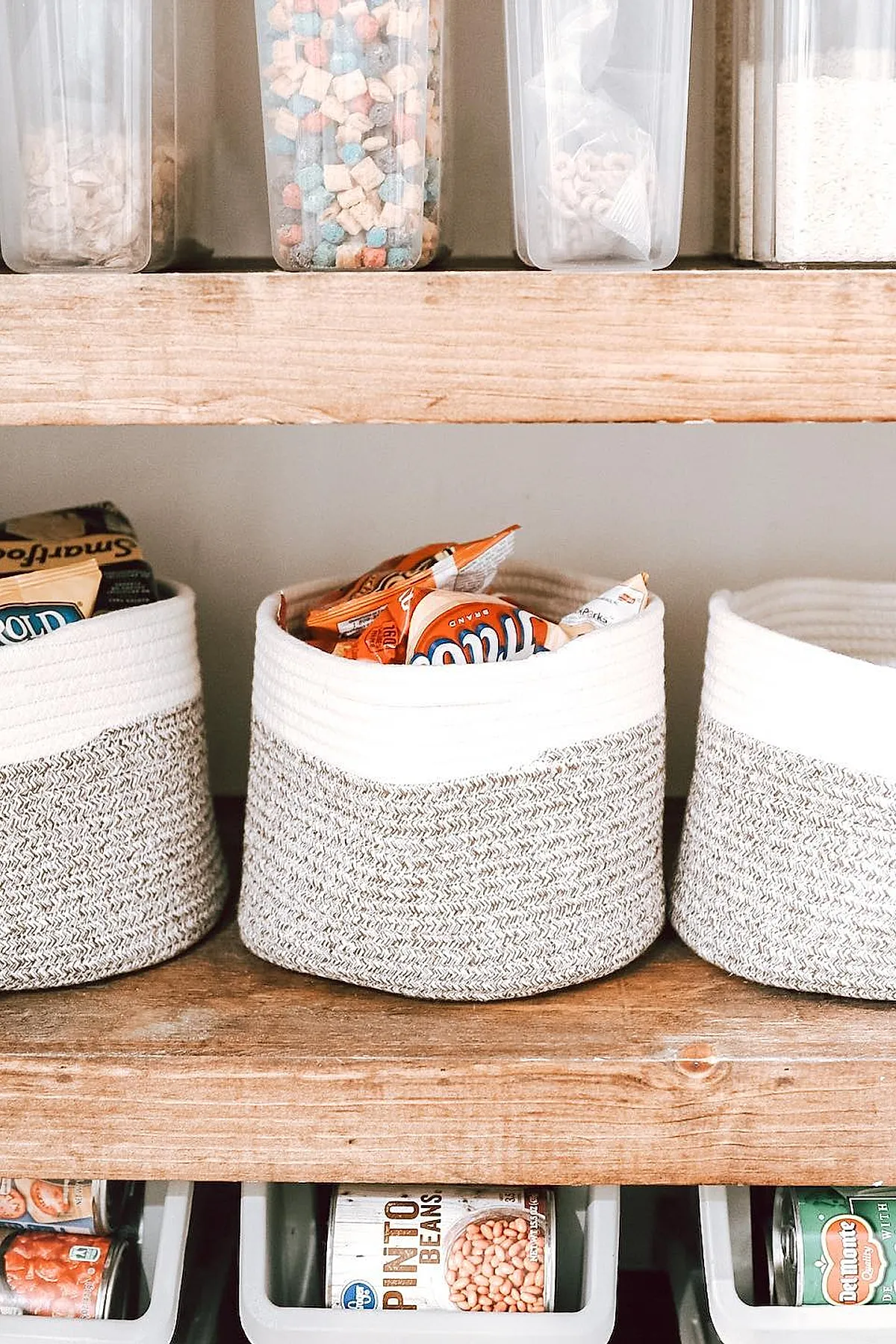
Rope baskets can store snacks and other pantry items.
Oversized bowls and irregular plates can be difficult to arrange. Plate dividers organize both kinds of dish, keeping the oversized bowls and irregular plates separated.
Snack Storage
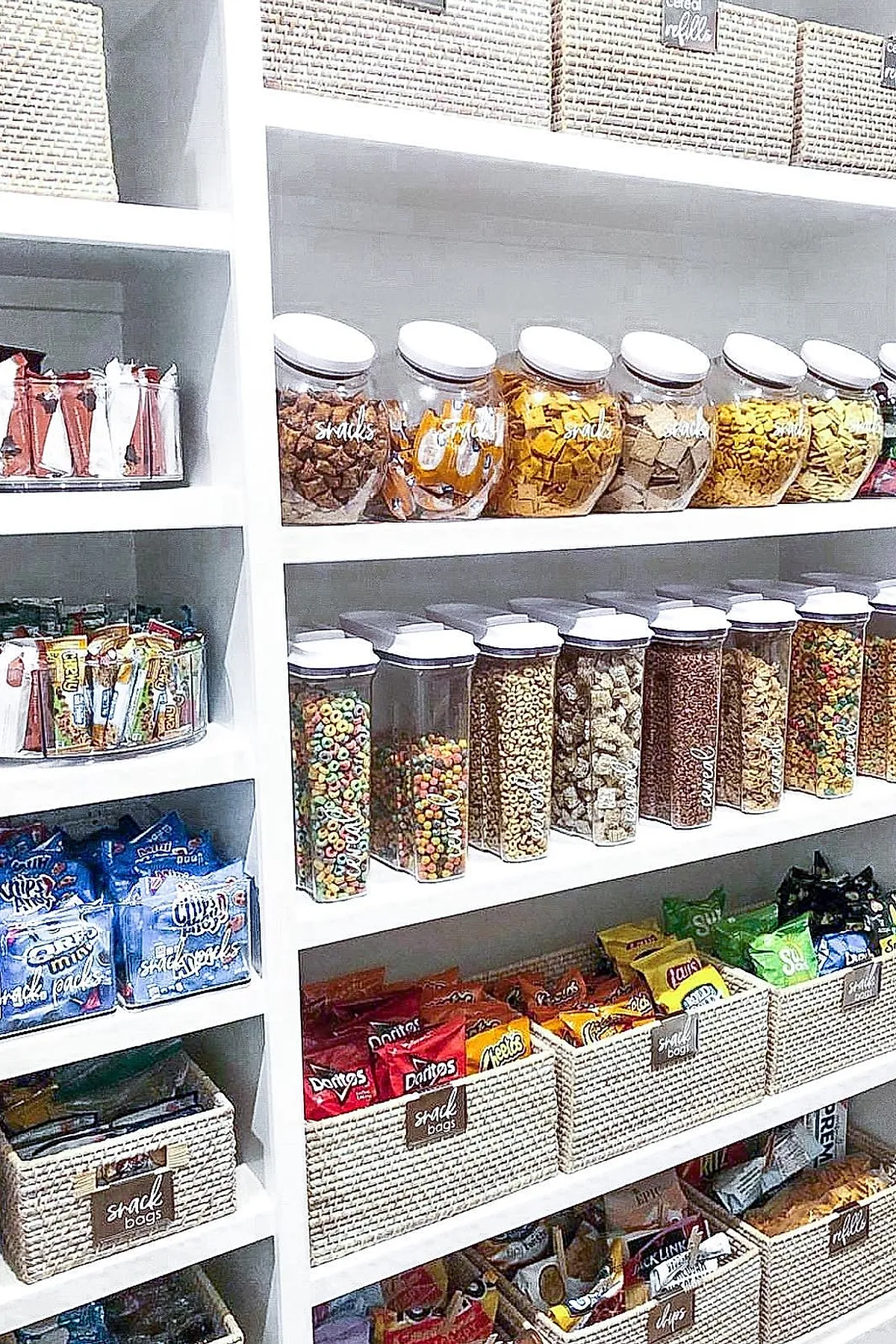
Clear jars and woven baskets can help organize a snack collection with multiple colors.
White Baskets and Wire Bins
A green bottle is part of the pantry setup. The storage holds one matching white basket and a wire bin, with both used to keep pantry items tidy.