Shelf styling gets good when books and objects have a little structure without making the display feel stiff. Mix upright and stacked books with varied heights, layered frames, candles, plants, and small grouped accessories, then use color, texture, symmetry, and negative space to keep the arrangement balanced.
Clean Classic
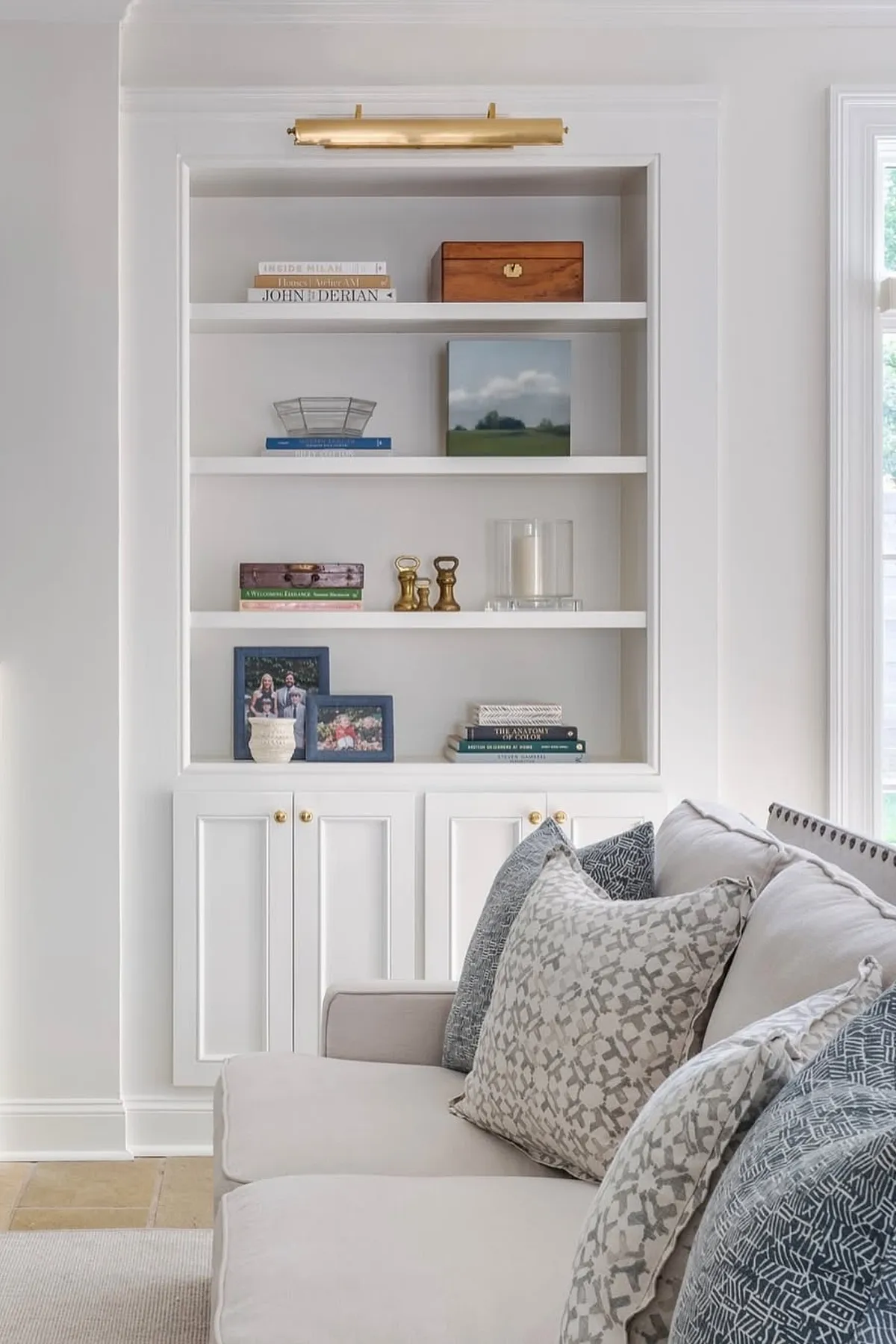
The shelf arrangement includes both vertical and horizontal books and objects, with their heights varied throughout. Small stacks of books sit with a glass candle, brass accents, and a wooden box, while personal photos add warmth without creating clutter.
Eye Direction
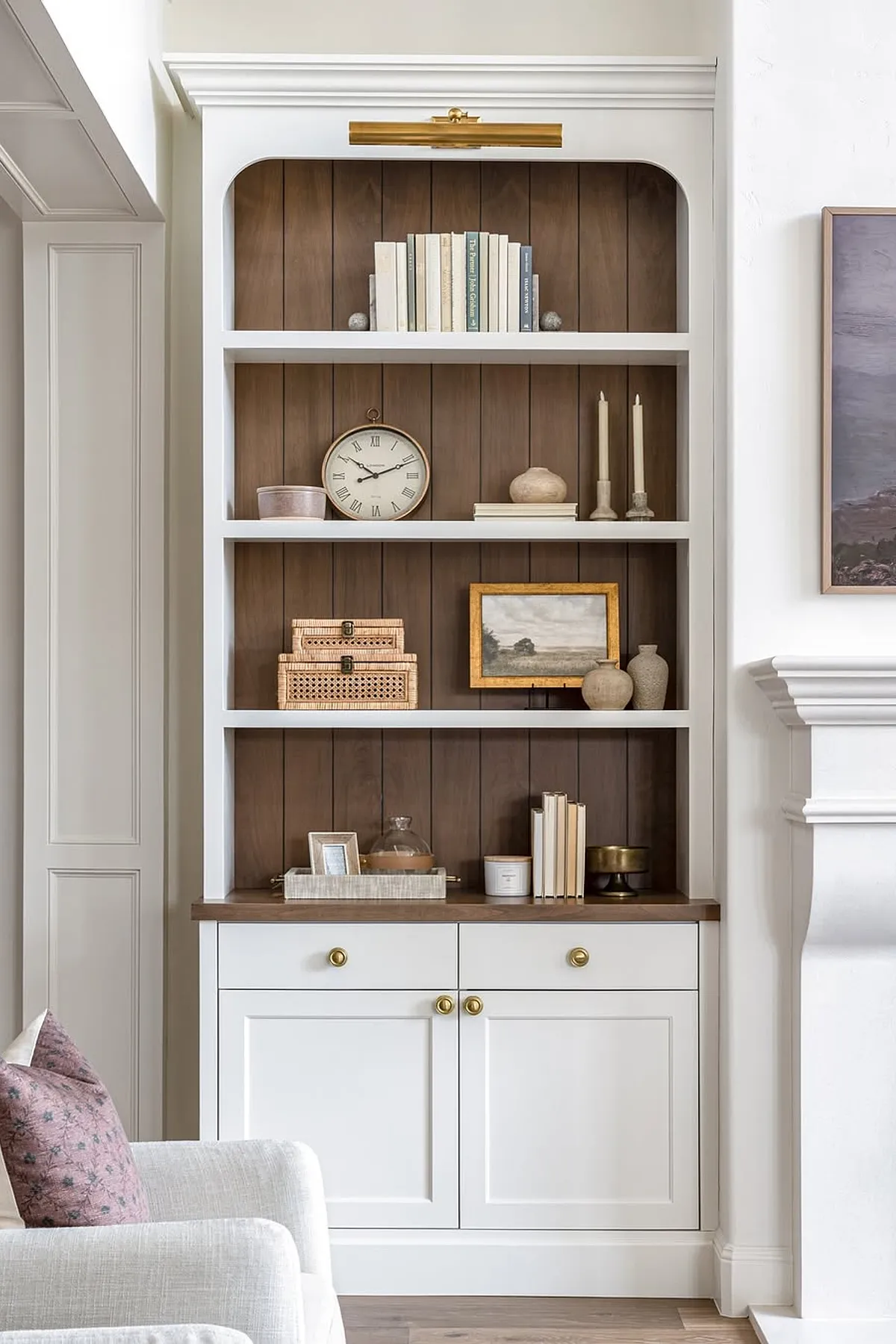
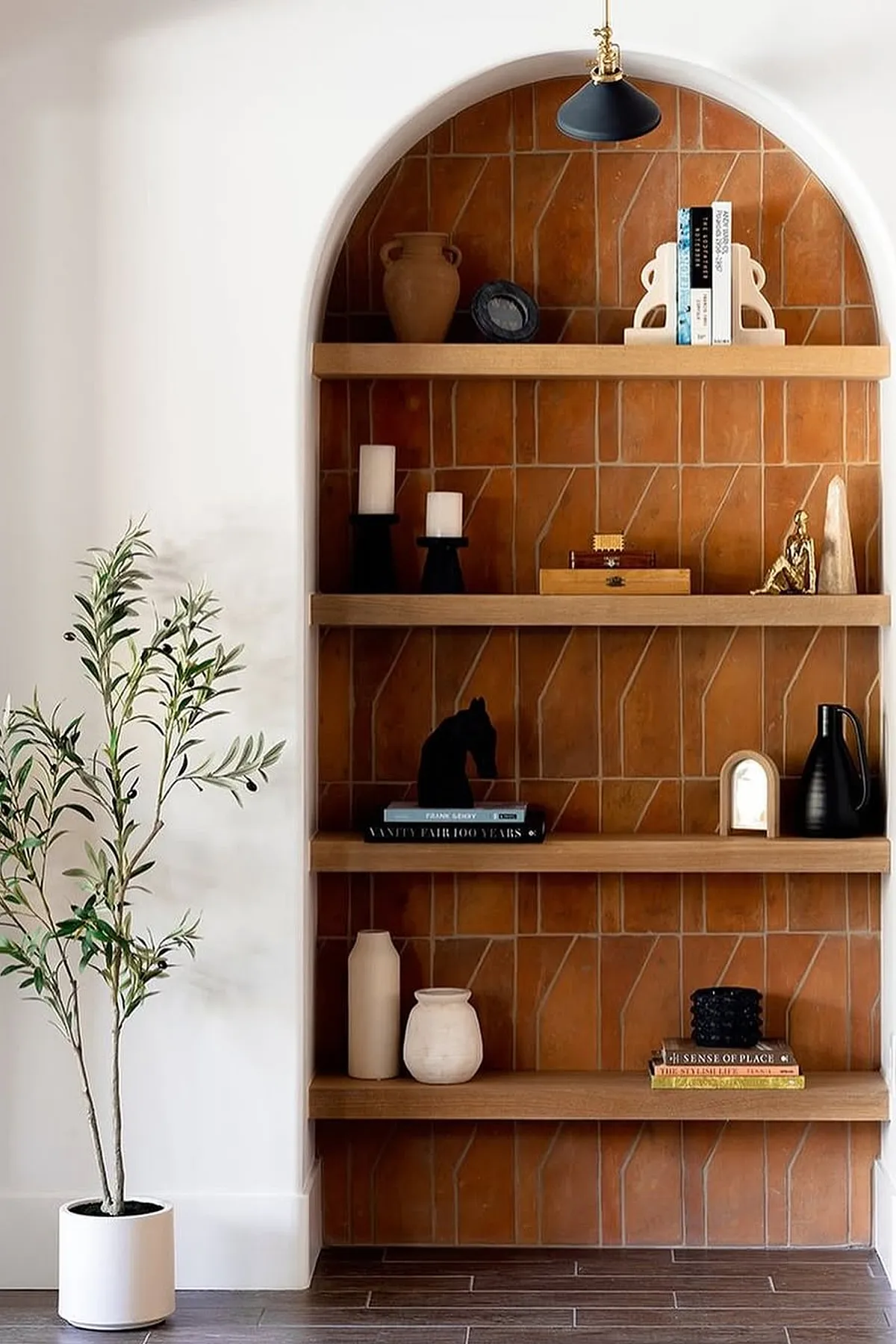
Offset objects on the shelves form a triangle or zigzag that the eye follows.
Balanced Styling
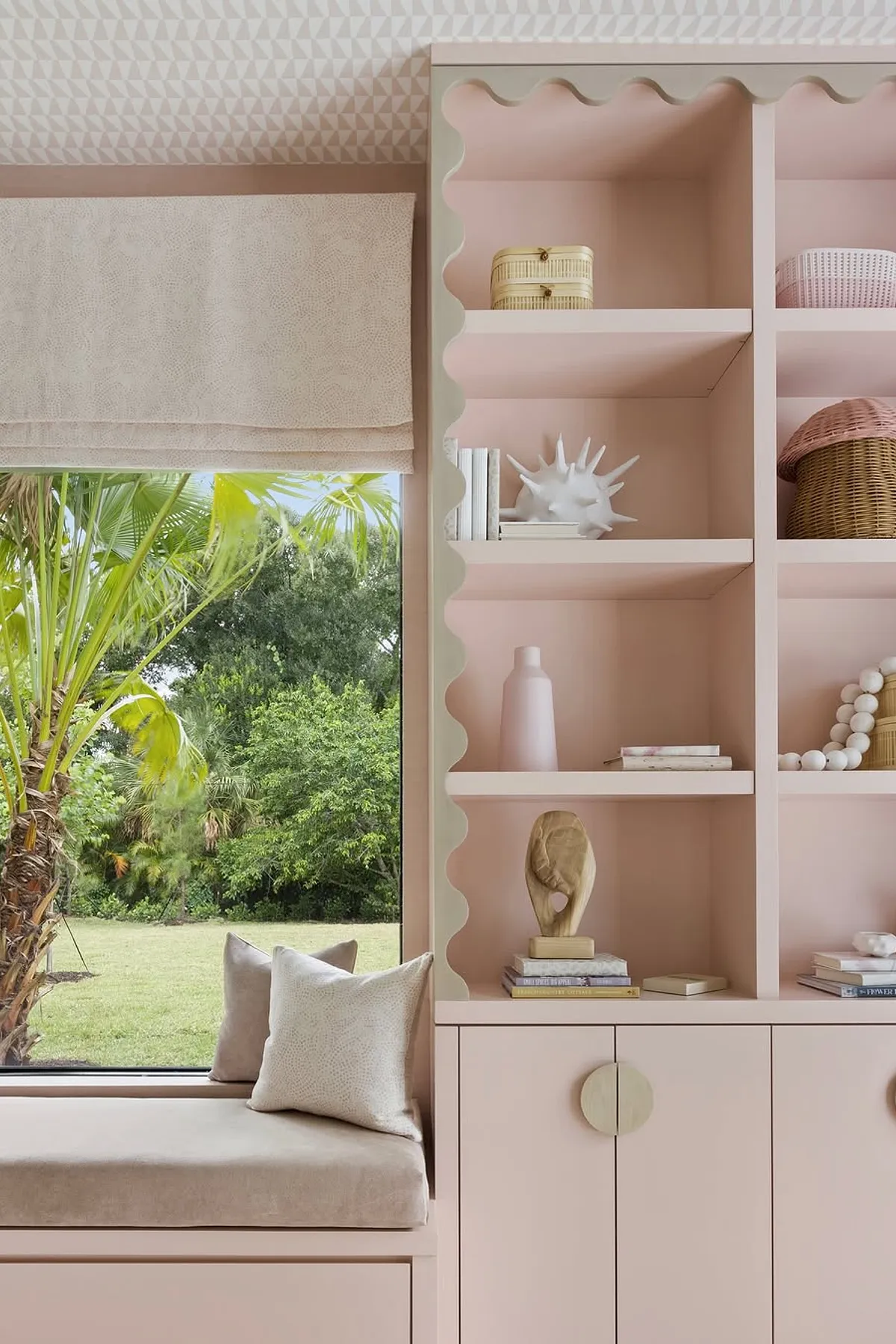
The palette is simple, with soft pink tones, natural textures, and neutral accents. Books are arranged in small groups that may be stacked or standing, while objects in groups of two or three vary in height and size to add variety without making the shelves look busy. Mixed shapes bring cohesion and calm while supporting the balance of the grouping.
Warm Minimal Shelves
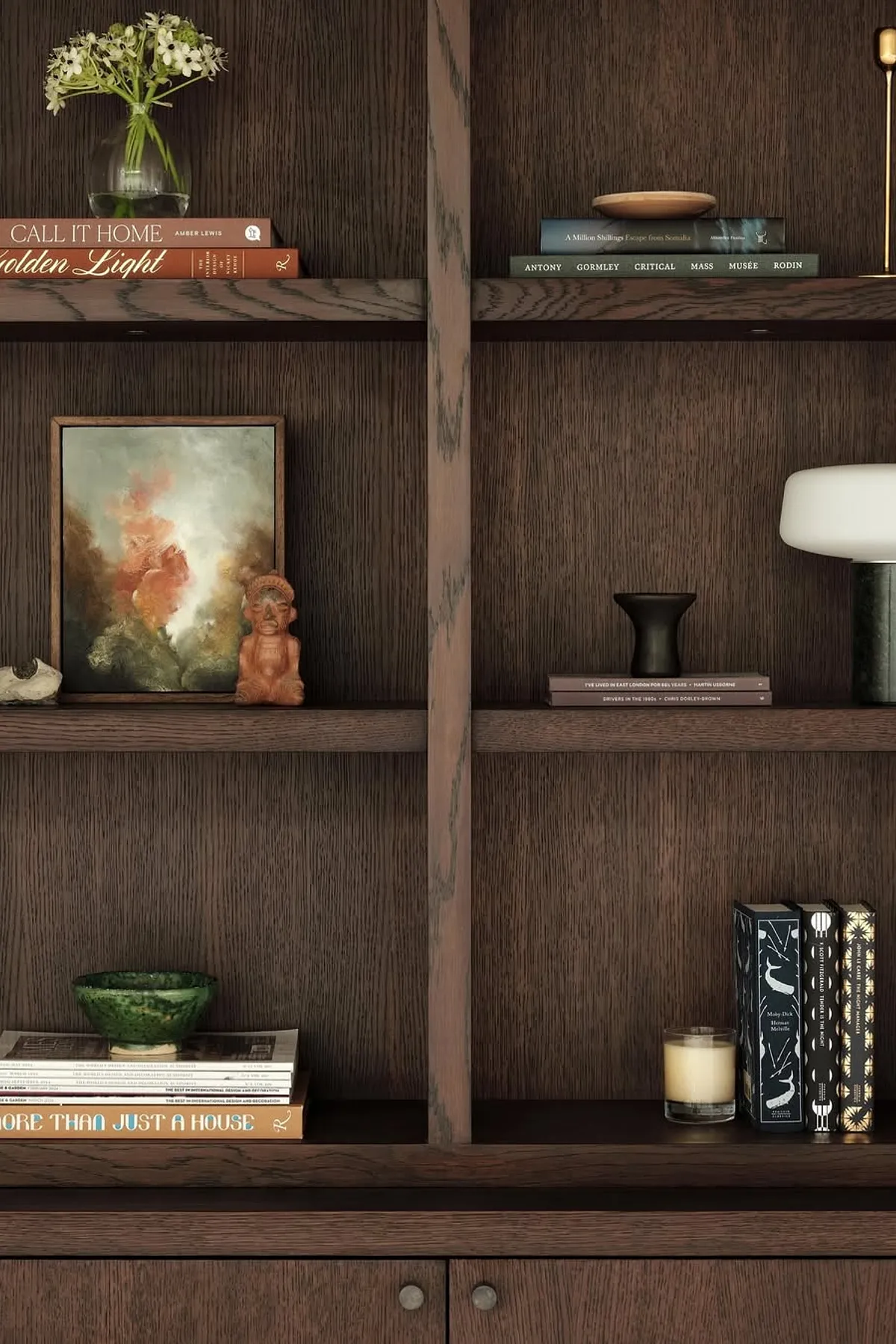
A small sculpture, candle, and green bowl are added to the shelves alongside horizontal stacks and upright groups of books for variety. Each arrangement uses a few flat books with a topper and a taller piece nearby, and the taller piece provides balance.
Stacked Shelf Objects
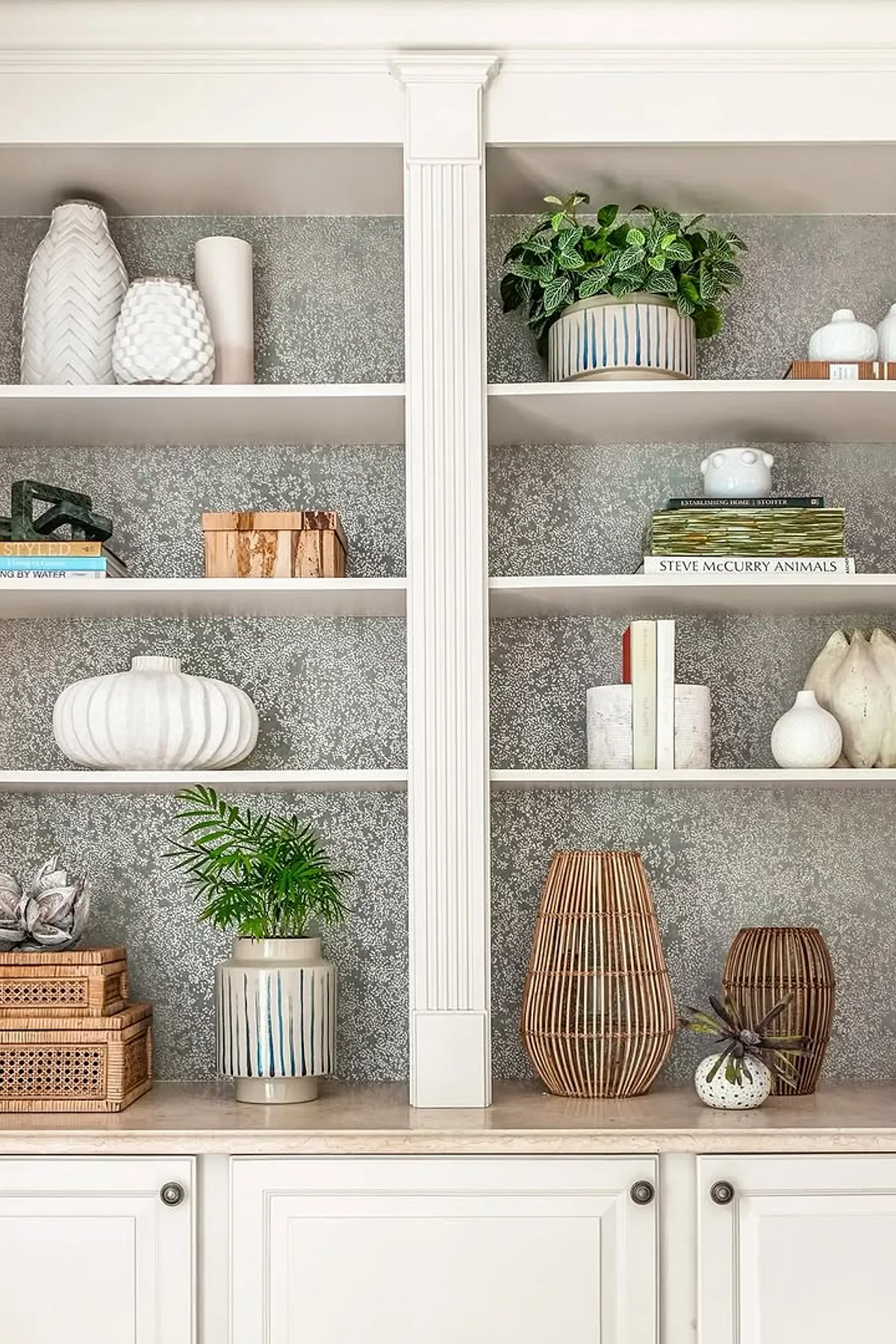
A low-profile topper, such as a small sculpture or plant, can sit on top of stacked boxes, with a decorative box underneath as an alternative to stacked books. Place a tall accessory beside the topper, or pair it with the low-profile topper to create height balance. Decorative objects can also sit on top of the stacked books.
Light Textured Shelving

Groups of two and three sit on the shelves, with plenty of negative space around them. The arrangement feels fresh and airy, using white and neutral tones, a coastal style, and natural textures.
Shelf Styling
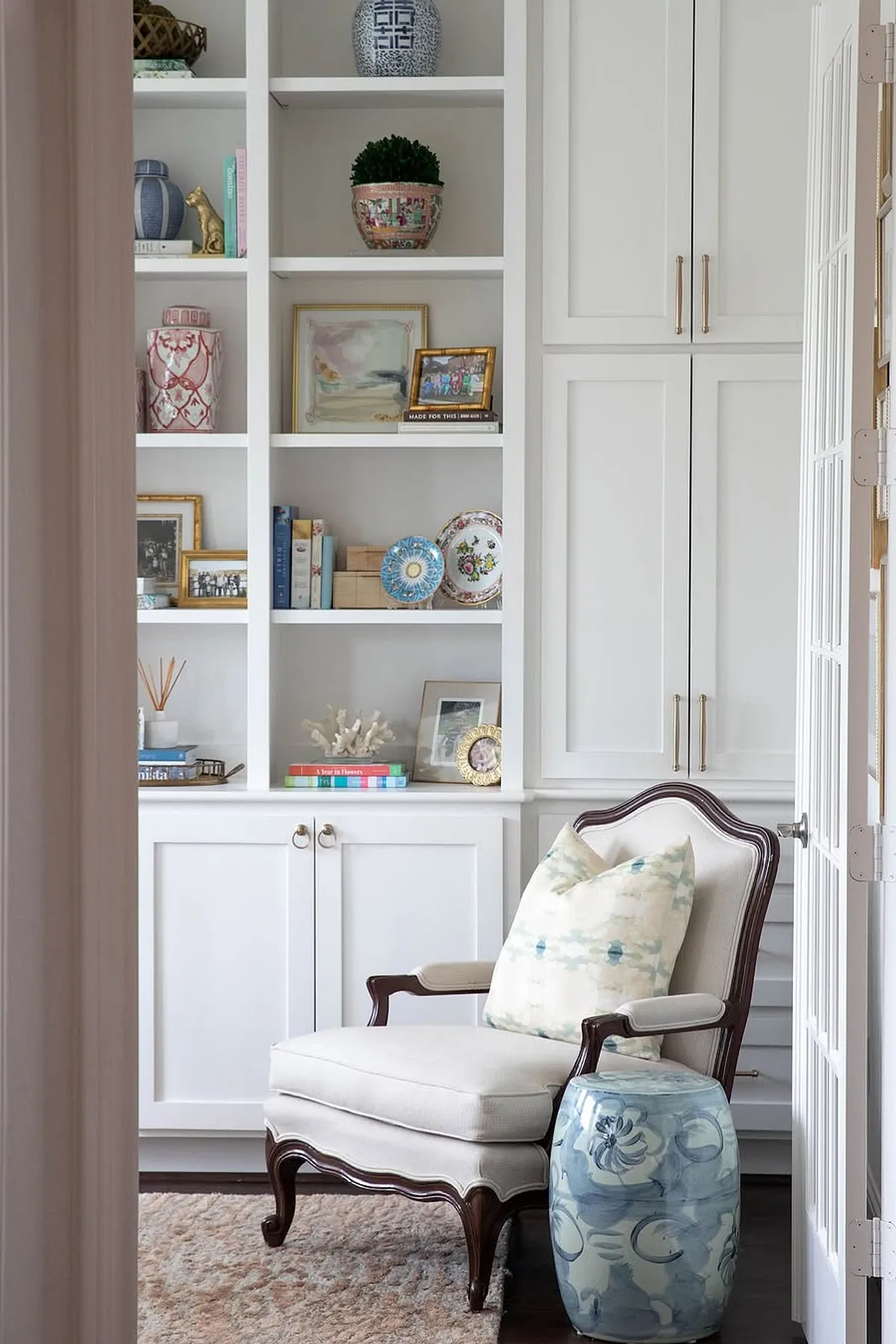
Bold, colorful patterned plates and vases contrast with smaller delicate objects. The number of objects varies between shelves to reduce clutter, and layered, overlapped art and photos create depth.
Books
A few books can add warmth and give the shelf a foundation. Arrange them in small groups, which can act as anchors while also adding structure.
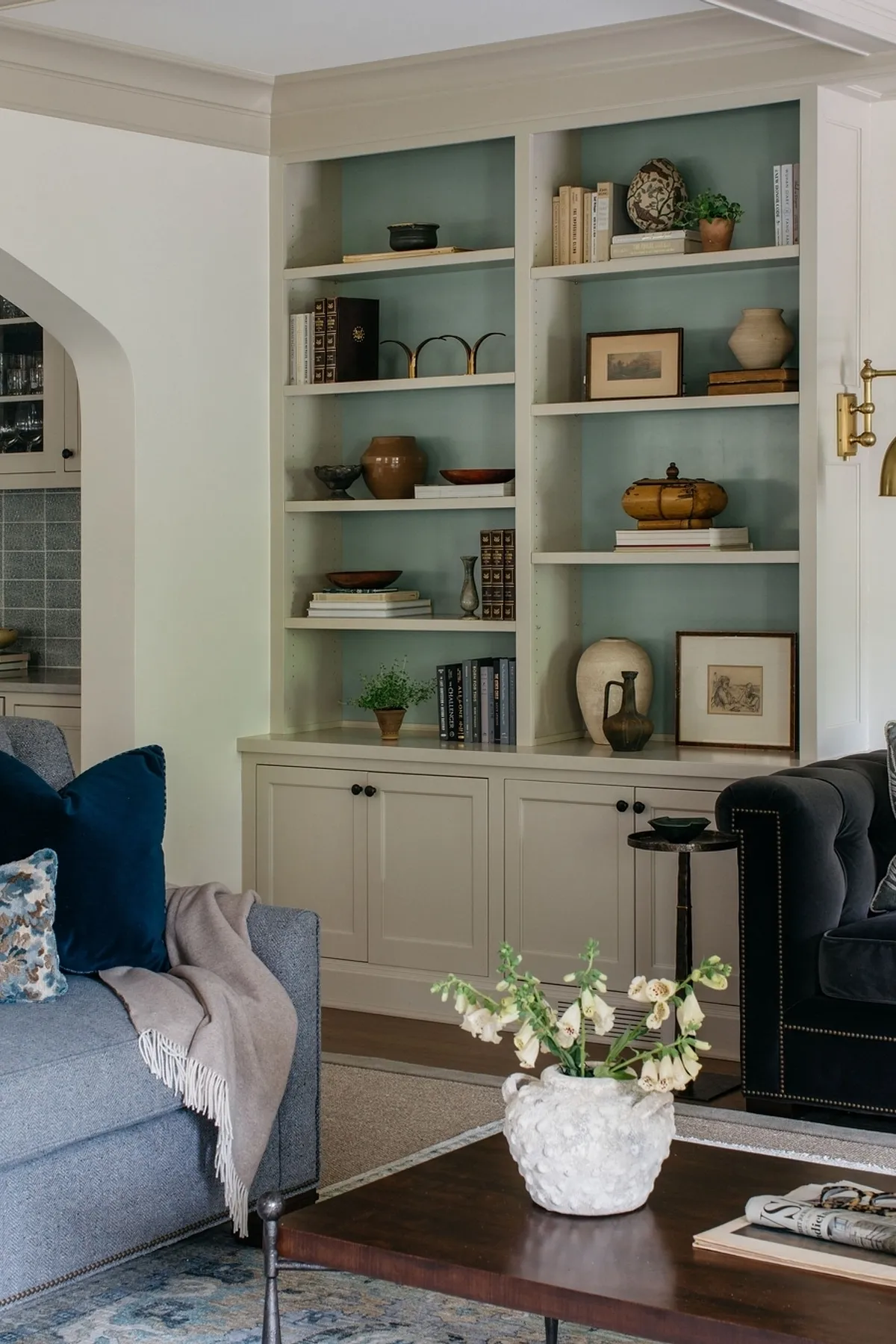
Vary the book groupings to reduce repetition. Lean some books at slight angles, use bookends for others that stand upright, and stack a few horizontally.
Height Variation
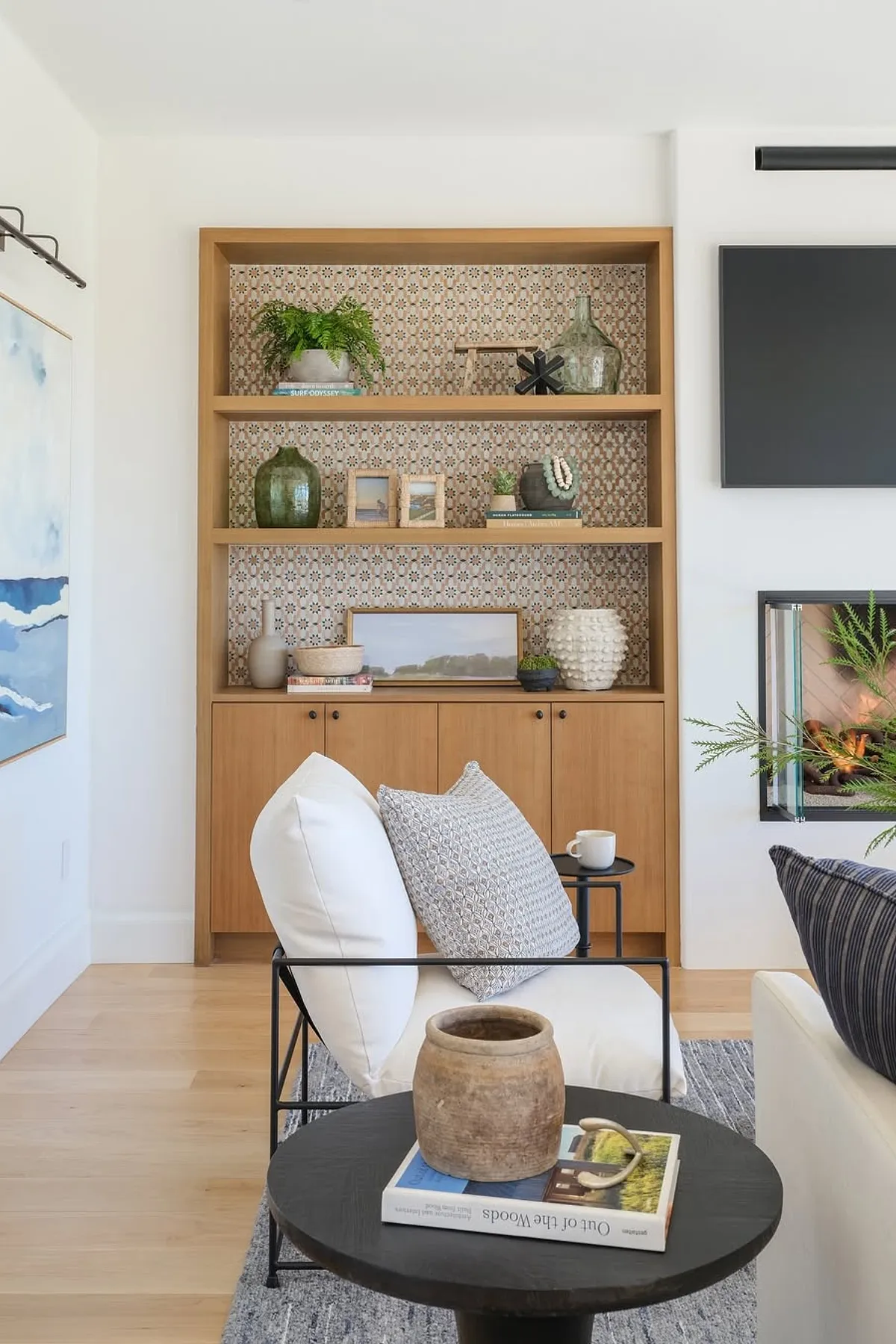
Mix wide, short, and tall pieces, including vases, framed art, bowls, candles, and plants. Varied shapes, sizes, and heights keep the display from looking flat and add depth, while narrow pieces can fill the smaller gaps.
A Subtle Sense of Symmetry

Stacked books topped with objects in varying sizes give the shelf sides symmetry without repeating the same arrangement.
Shelf Colors

A cohesive palette can unify the shelves without making every item match. Choose complementary colors, keep the selection to 3-4 colors, and distribute them evenly.
Color clumps are easier to avoid when you mix textures and materials throughout the shelves. Spread those different textures and materials across the display instead of gathering them in one spot.
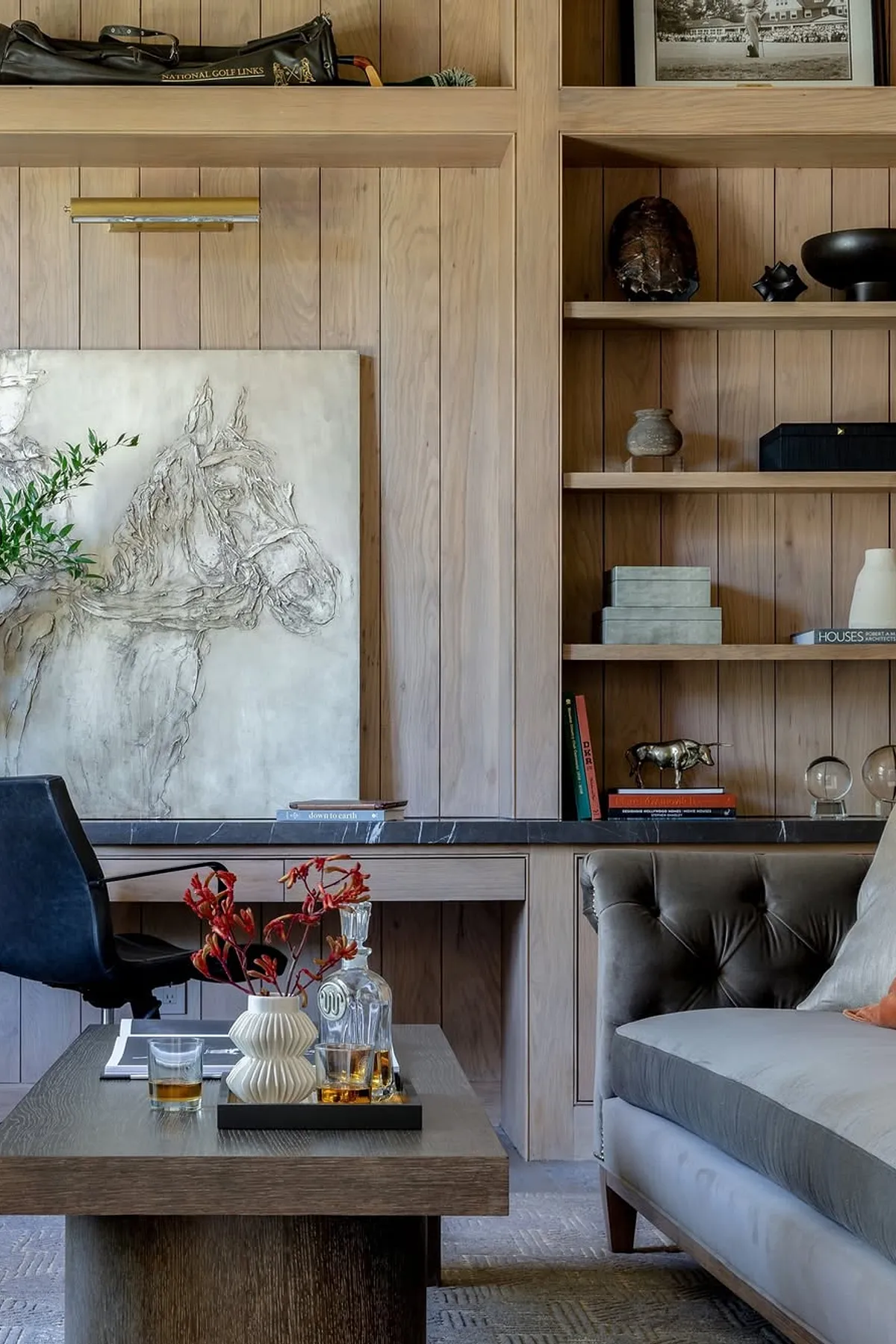
The beige, brown, and cream shelf palette includes varied shapes and heights. Those shapes support visual balance, while the different heights add visual interest.
Book Arrangements
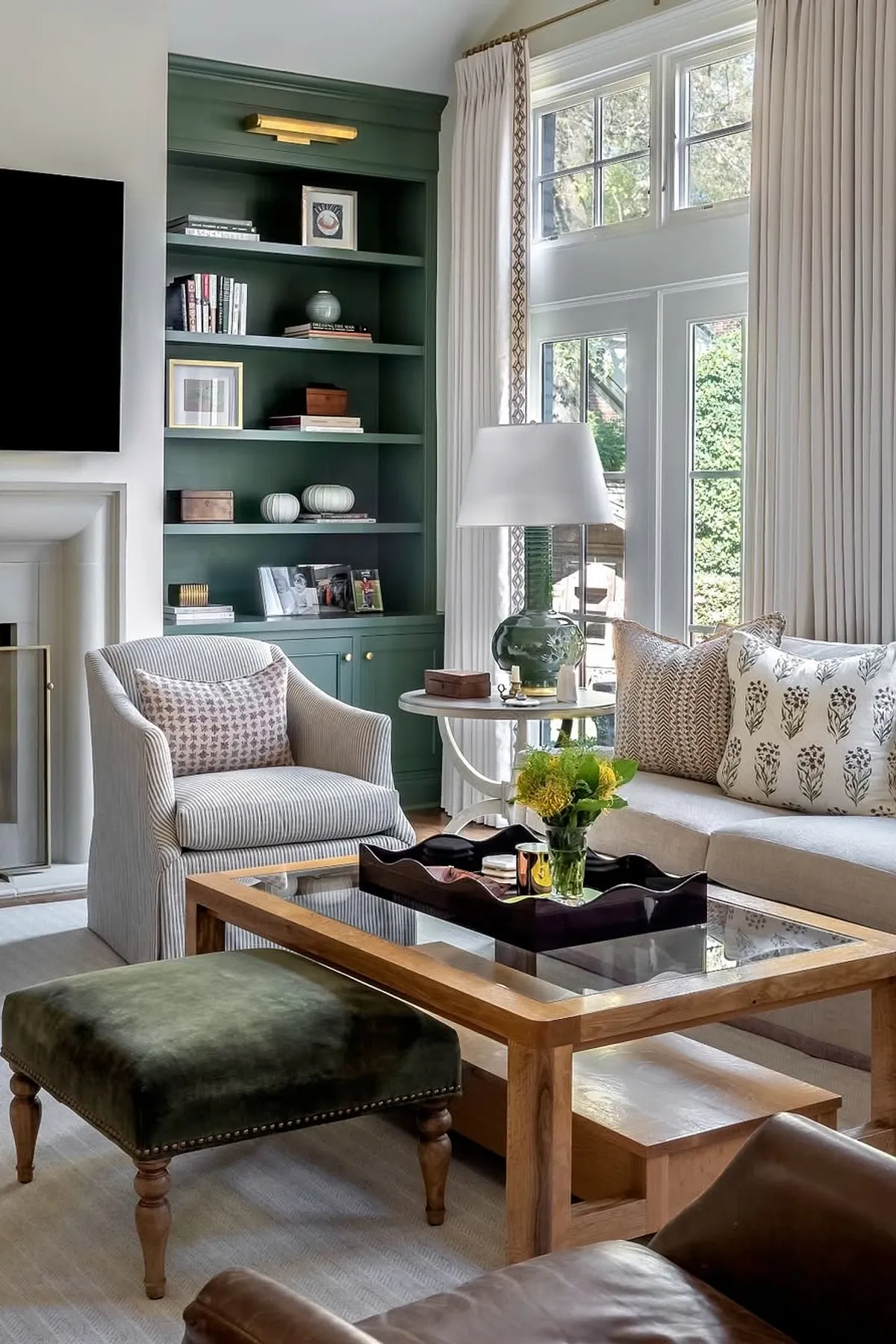
Some books are grouped in small sets, including horizontal stacks and vertical rows held by bookends. A few others are slightly leaned to keep the arrangement from looking too uniform.
Clean Minimal Shelving

A few objects keep the arrangement fresh and uncluttered. Two book groupings provide the structure, with one flat stack and one upright stack; an accessory sits on top of the flat stack, while a bookend is placed with the upright stack.
A Book Filled Shelf

Across the shelves, a repeated formula uses stacked books with a decorative topper and upright books arranged by height. Tall candlesticks and layered frames add height and variety while breaking up the horizontal lines, and the arrangement avoids crowding. Repeating the formula creates cohesion and balance, making it an effective shelf arrangement.
Airy Balanced Shelving

A light palette of natural wood, soft greens, and neutrals keeps this simple shelf arrangement feeling open. Larger pieces such as pottery and framed art give the shelf sections structure, while small accessories are grouped in pairs or sets of three so they add interest without creating clutter.
Clearing the Shelves
Blank shelves reveal opportunities for balance, color, and texture instead of just showing you where to shuffle items. Clear the shelves first so you can make a new arrangement from the beginning.
A Colorful Shelf Display

Throughout the rich, layered shelf arrangement, blue, pink, and brass accents repeat to tie the colorful books, art, and decorative accents together. Mixed books are stacked and placed upright in a repeating pattern, with small accessories set on top of the book tops.
Object Grouping
On the shelves, overlap and cluster items to form intentional groups rather than setting everything in side-by-side rows. Odd numbers work well here, especially groups of three.
The arched shelves hold a tall plate at the top, with a small braided sculpture behind the plate. On the right, a vase and candles are arranged with descending heights.
Place large items alone so they can stand on their own. Group the smaller pieces together.
Last modified: February 10, 2025