A Christmas wreath is more than a festive accent. This centuries old tradition turns an ordinary entrance into a warm holiday welcome.
The first modern Advent wreath was made from a simple cartwheel in 1839, giving children a way to count down the days to Christmas. It began as a church tradition before making its way into British homes during the 19th century. Over time, the wreath grew from a religious symbol into a beloved seasonal decoration.
Ribbon Wreath Hanging
On the interior side, secure the ribbon after it has been draped over the door. To set it up, loop the ribbon through the wreath, then choose either a command hook or a letterbox tie.
Holding power matters, so choose adhesive hooks or command strips with an appropriate weight capacity. Both options can provide the support needed when their rated capacity suits the wreath.
Command strips and adhesive hooks work best on smooth surfaces, but they may struggle in extreme temperatures. They are an option for covered porches, while fully exposed areas are less suitable.
Eye-Level Wreath Focal Point

Hang the wreath at eye level, with its center generally 57 inches above the ground, to give it clear visual priority as a focal point.
Street View Wreath Visibility
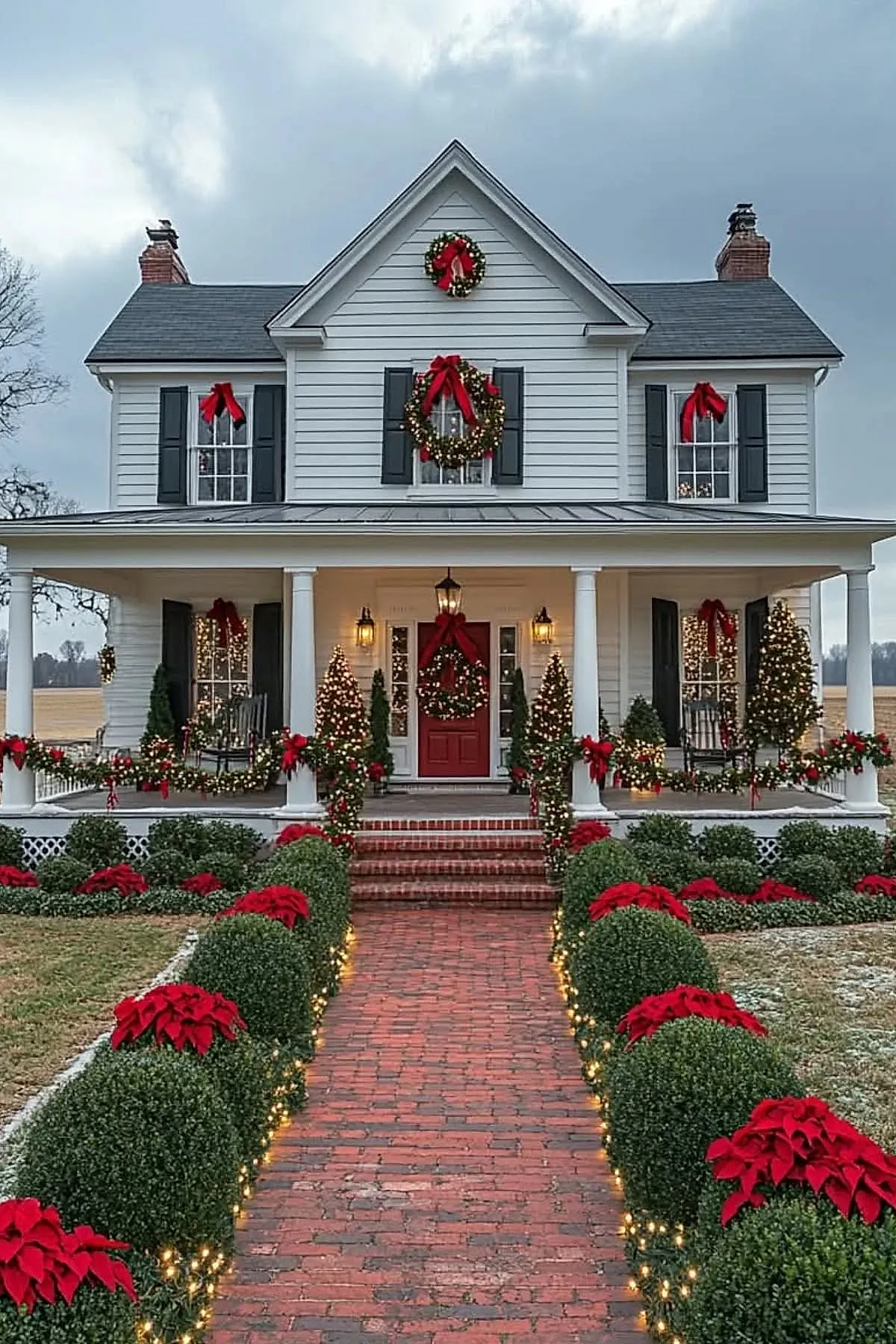
From the sidewalk or street, check how clearly the wreath can be seen and consider its impact from that distance. Street visibility supports curb appeal, so assess the wreath where visitors will actually view it.
When a wreath looks insignificant on the door, go up in size. Wreaths can appear smaller in photographs than they do in person, so if you are unsure, choose the larger option rather than a smaller wreath.
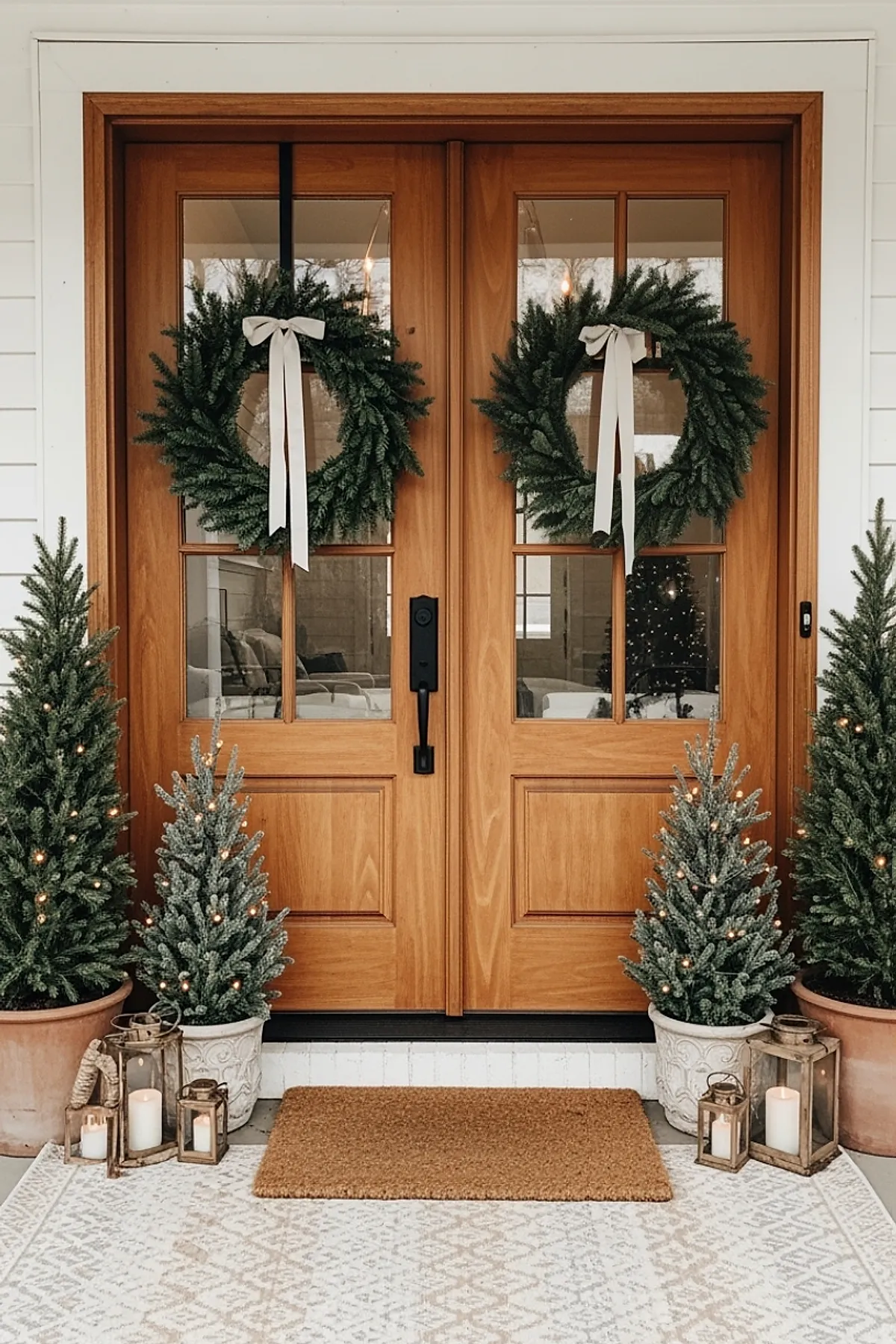
On double doors, matching the wreath heights creates symmetry. If one door is larger or one wreath is fuller, hang that wreath higher to give the arrangement better visual balance.
Wreath Sizing
The holiday display can look different when the wreath is the wrong size. Choosing the correct size depends on the door or entrance where it will hang.
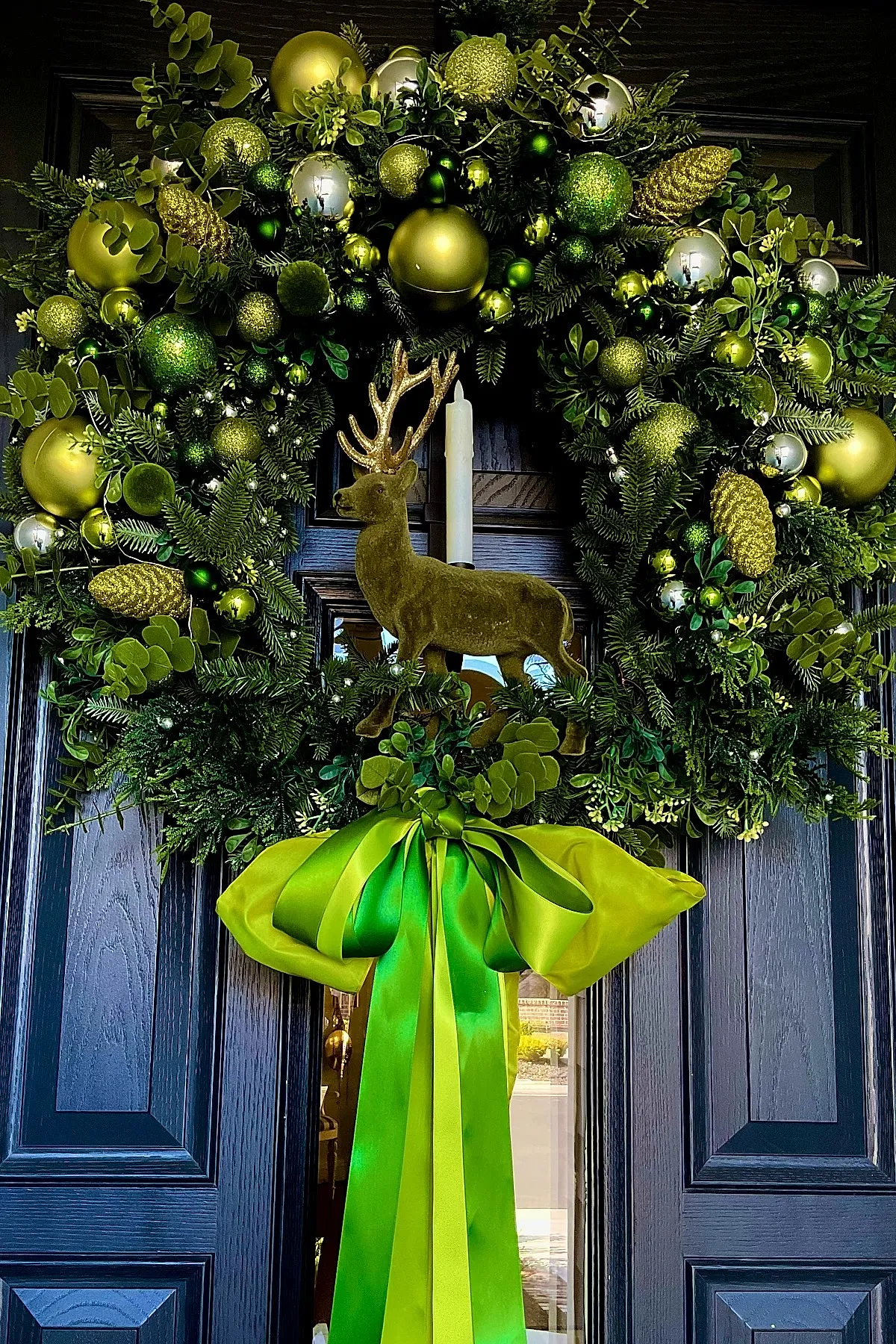
For a standard 36-inch front door, choose a wreath that measures 24 to 30 inches across when the door itself is 36 inches wide. That size should cover about two-thirds to three-quarters of the door.
On a single door, a 24-inch wreath creates a proportional look. Choose a 30-inch wreath for a grand entrance or a bolder statement.
On a very large entrance, the wreath needs enough size to remain visible rather than getting lost. For 8-foot doors or wider openings, a wreath measuring 36 to 42 inches across prevents the decoration from disappearing against the oversized entrance.
Rustic Natural Wreath
This wreath has an organic look and a less polished finish, so it can work across a wide range of settings.
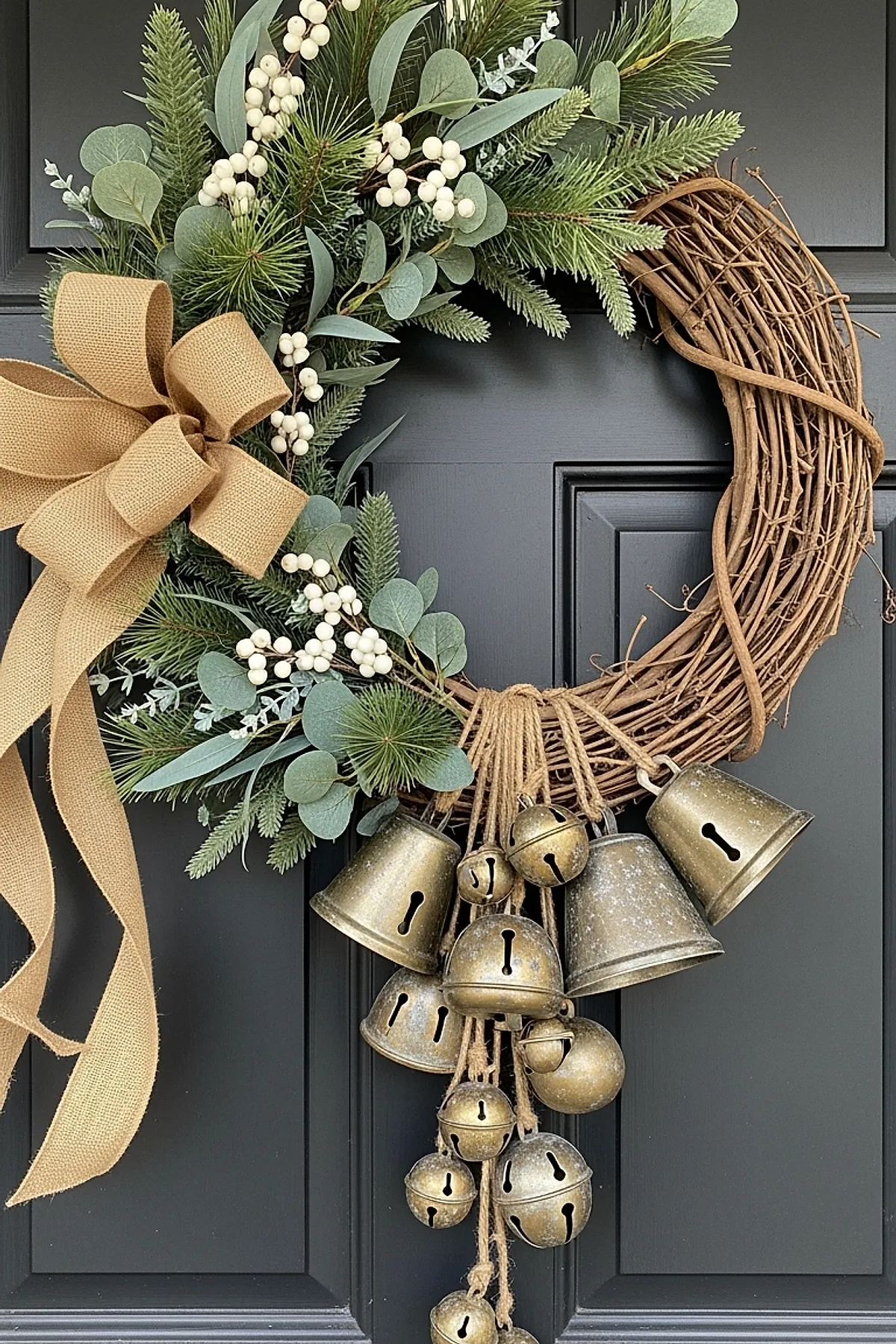
Twigs, branches, dried flowers, and seedheads give this wreath a layered foundation. Burlap and wooden accents add more material variation, creating texture and interest throughout the arrangement.
Pampas grass is one of the materials often used in this arrangement, joined by willow branches, teasel seedheads, rose hips, and dried hydrangea blooms. The palette brings together warm brown shades, muted greens, cream, and rust for a natural mix.
This wreath pairs well with stone exteriors and wood-sided homes, and it also works beside barn-style doors or other farmhouse architecture. It suits both country-themed homes and cottage-style homes, while its imperfect natural look enhances the overall aesthetic.
High-Quality Artificial Wreath
The difference is most noticeable in the decorations themselves. High-quality artificial wreaths do not look like obviously fake decorations.
Real touch technology creates branches with a lifelike appearance and feel.

An artificial wreath can be reused year after year and usually needs only light dusting. UV-resistant materials help it tolerate various weather conditions.
Artificial wreath quality varies dramatically, so check for sturdy construction, commercial-grade bows, realistic needle patterns, natural color variations, and UV-resistant ornament coatings that prevent fading.
Traditional Christmas Wreath
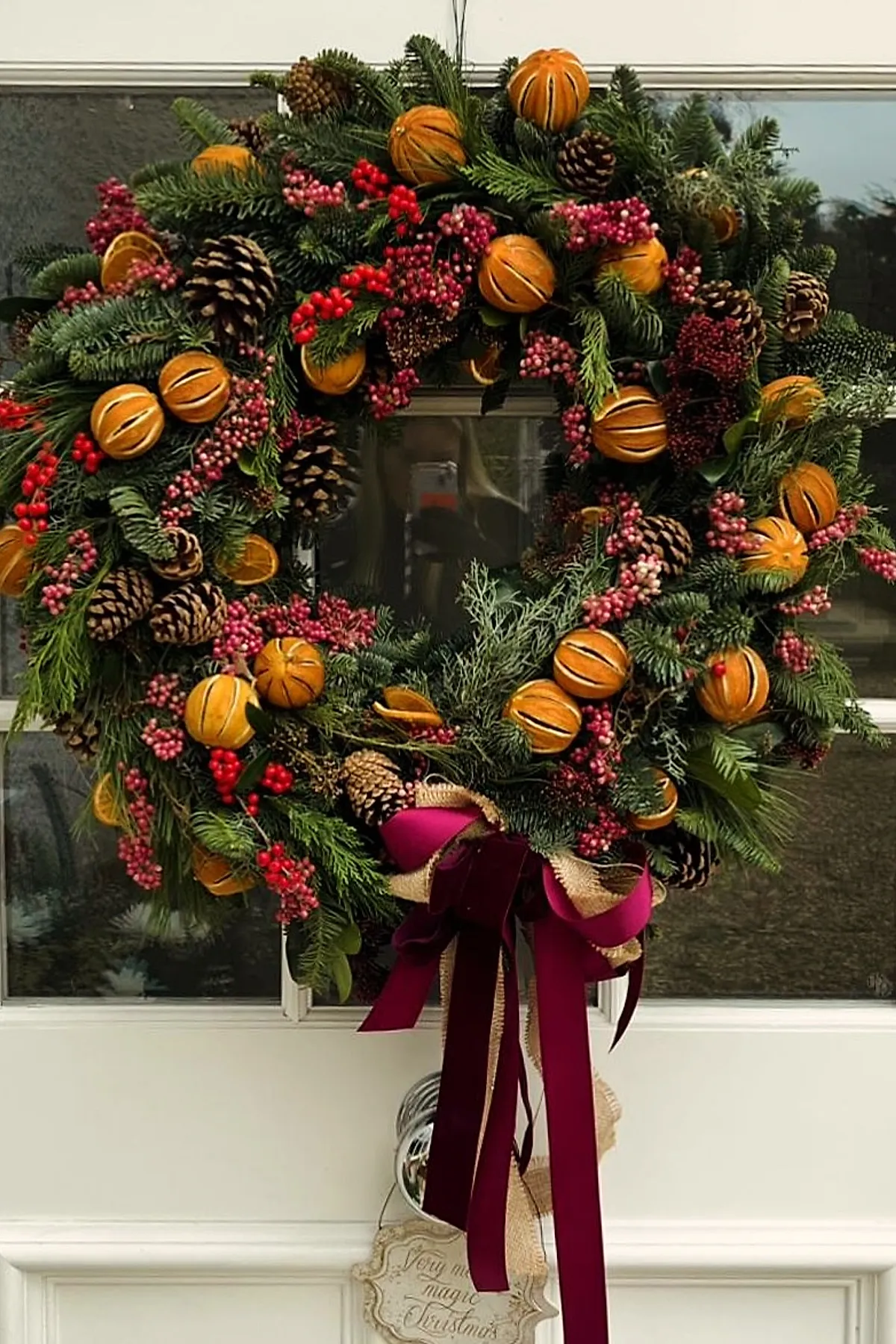
Holly, spruce, pine, and laurel can all be part of the foliage. The base is evergreen, giving the wreath its quintessential holiday look.
A forest green base gives the wreath its deep color, while bright red berries and natural pinecones add contrast. Ribbons in red, gold, and burgundy bring in the remaining accent colors.
Georgian facades and Colonial homes suit this traditional wreath, as do Victorian exteriors and Cape Cod cottages. Its familiar shape fits each of these home styles.
Wreath Hanging
At the top of the door, an over-door wreath hanger fits over the standard door top. Made from metal or plastic, it holds the wreath securely without needing nails or screws.
Most wreath hangers can accommodate doors up to 1.75 inches thick, but measure your door and review the hanger specifications before purchasing. Choose one with felt backing to help prevent scratching.
Wreath Decorations Beyond Greenery
Natural materials such as cinnamon sticks, dried orange slices, pinecones, and wood ornaments bring organic beauty to wreaths. Oversized velvet ribbon and statement bows are additional decoration options.
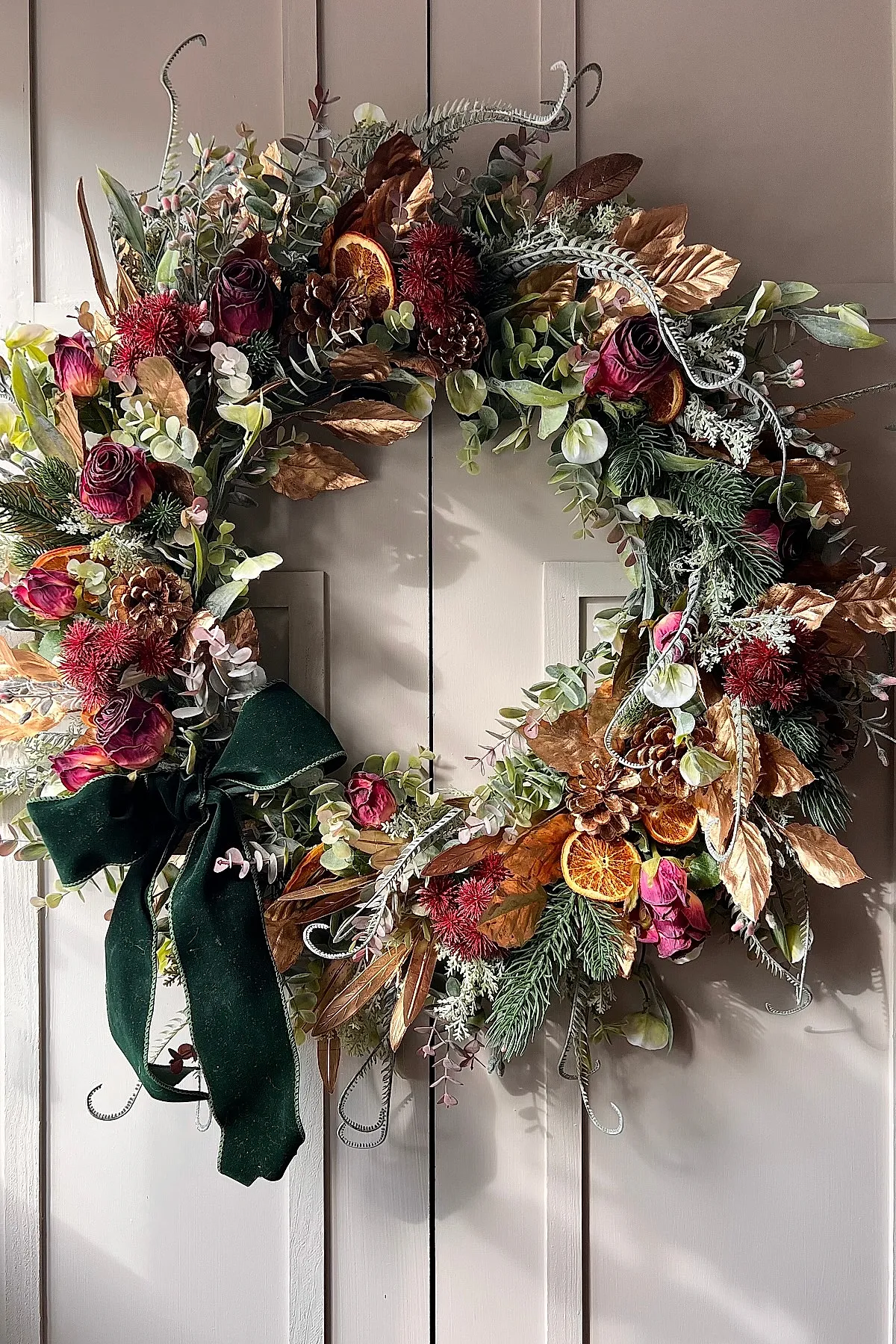
Felt adds a soft texture to the holiday display. Felt critter ornaments and needle-felted animal ornaments bring playful charm.
Fresh greenery offers fragrant authenticity, while a quality artificial wreath provides lasting convenience. Choose the option that best reflects your personal preference.
On the door, a wreath creates a warm welcome, marks seasonal celebration, and adds holiday magic.
Battery-Operated Wreath Lighting
A battery-operated pre-lit wreath casts a welcoming glow that remains visible during evening hours.

Modern Minimalist Wreath
Contemporary doors and interiors can carry a wreath with clean lines and a restrained arrangement. Geometric shapes, negative space, and monochromatic schemes keep the design spare.

An asymmetric wreath sits off-center, with intentional gaps built into its shape and placement.
Traditional red and green no longer define the palette. The color range also includes champagne golds, icy blues, soft pinks, deep plums, and neutrals.
Sleek metal doors work well with this wreath, especially alongside contemporary architecture. It also complements minimalist interiors.
Fresh Wreath
Spruce and the other evergreen materials give the arrangement authentic texture and fragrance. Noble fir, white pine, incense cedar, Fraser fir, and spruce are all used to create those qualities.
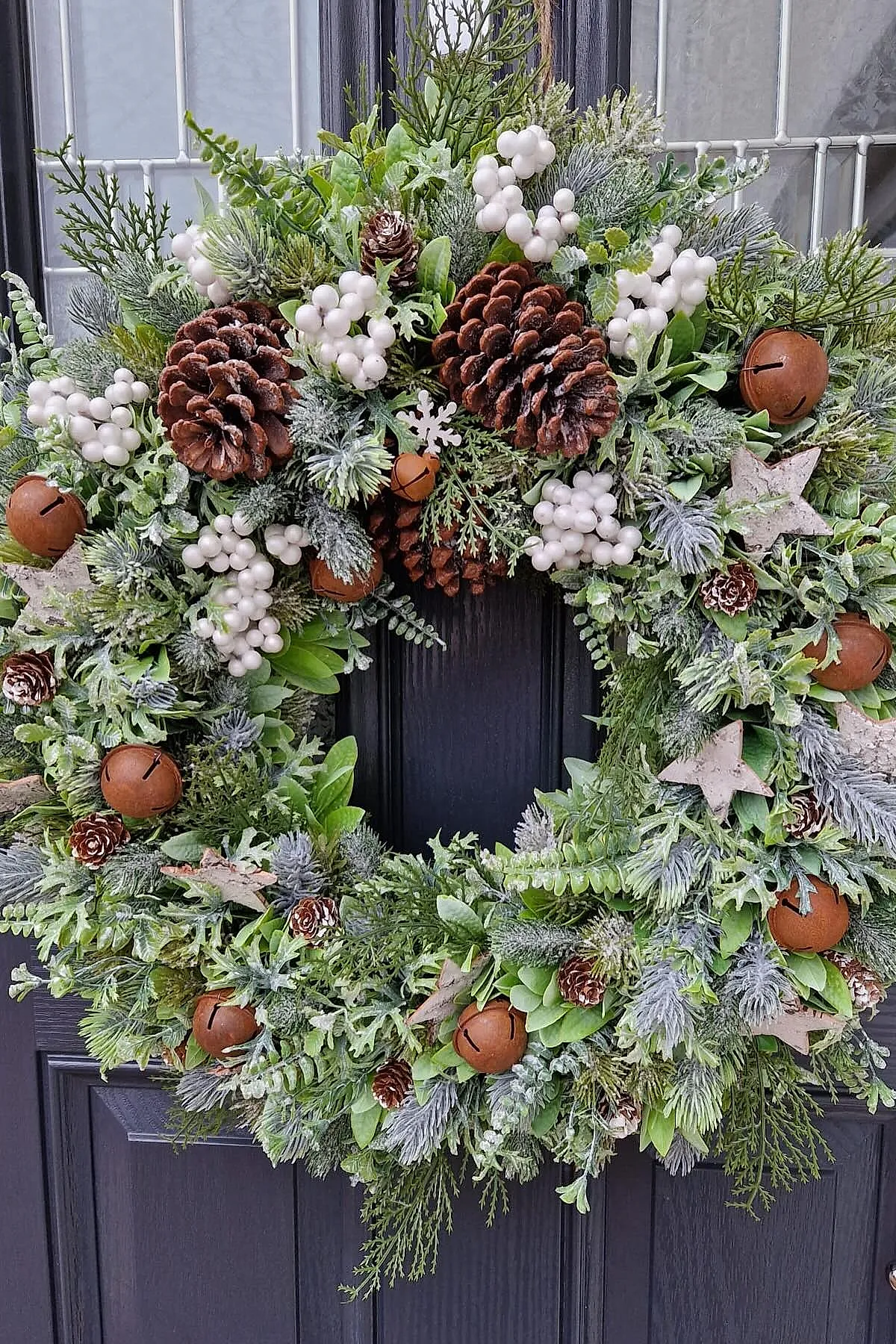
A fresh wreath can last longer outdoors in cool conditions, while its indoor lifespan is 2 to 3 weeks with proper care. Soak it before hanging, apply an anti-desiccant spray, and mist it every 2 to 3 days.
Choose a wreath with few fallen needles, then gently shake it and check for a noticeable fragrance and vibrant color. If many needles fall, choose a fresher option.
Wreath Color Coordination
The front-door color influences the wreath selection. With a red door, try cream, beige, or natural greenery, or keep the look monochromatic with pink and burgundy.
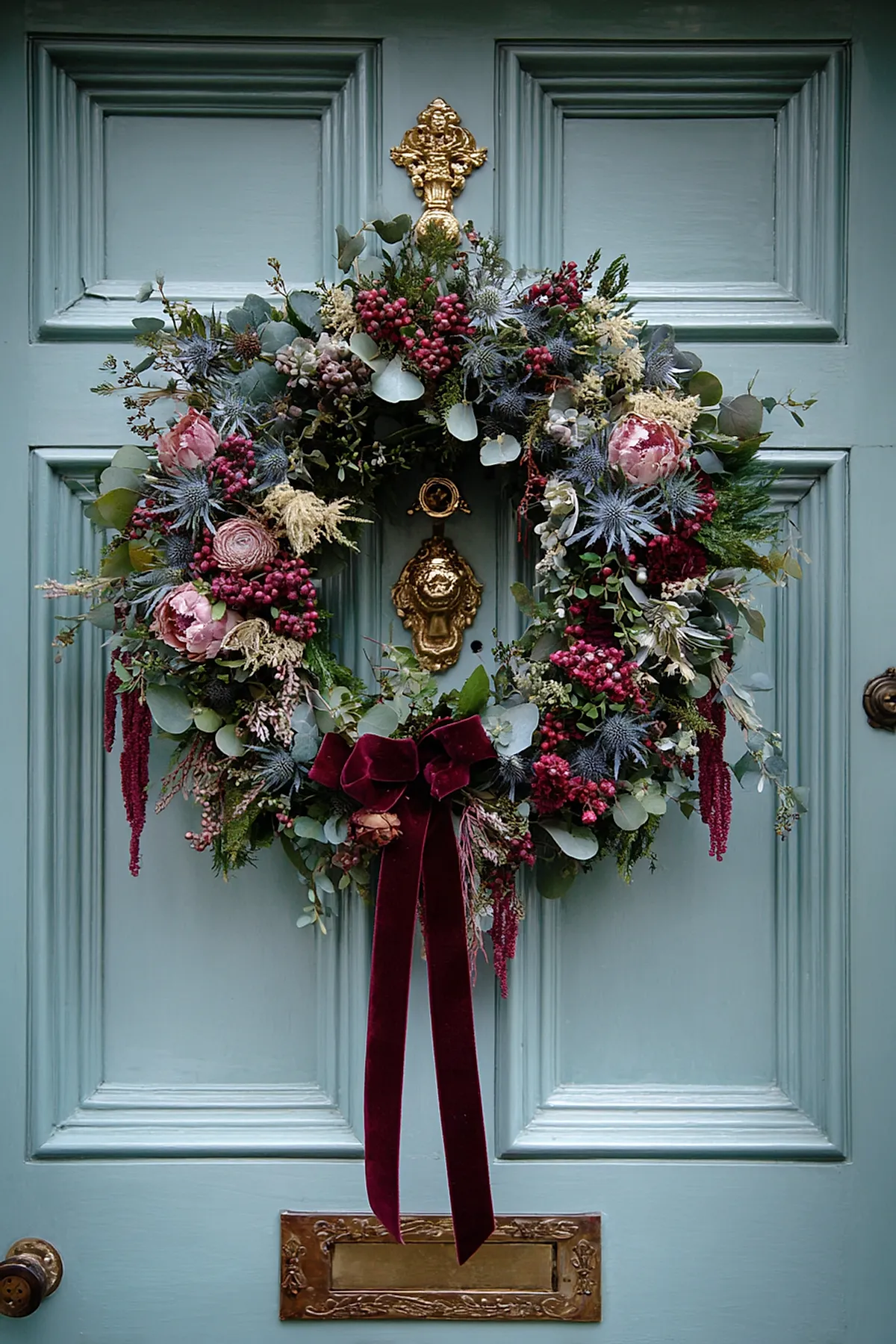
White or cream doors offer flexibility, working with both bold colors and subtle colors. For a black door, consider metallic accents, white, silver tones, or jewel tones.
Copper can work with a navy blue door, along with silver, white, or natural greenery. A green door pairs with burgundy, gold, and natural wood tones.
Wreath Material Coordination

For composite or aluminum doors, choose a wreath with a sleek, contemporary look and a metallic finish.
Wood doors suit wreaths made from natural materials with a classic design. On a glass-paneled door, use a lightweight wreath to preserve the view, while a solid door can support something substantial and heavily decorated.
Wreath Architectural Coordination
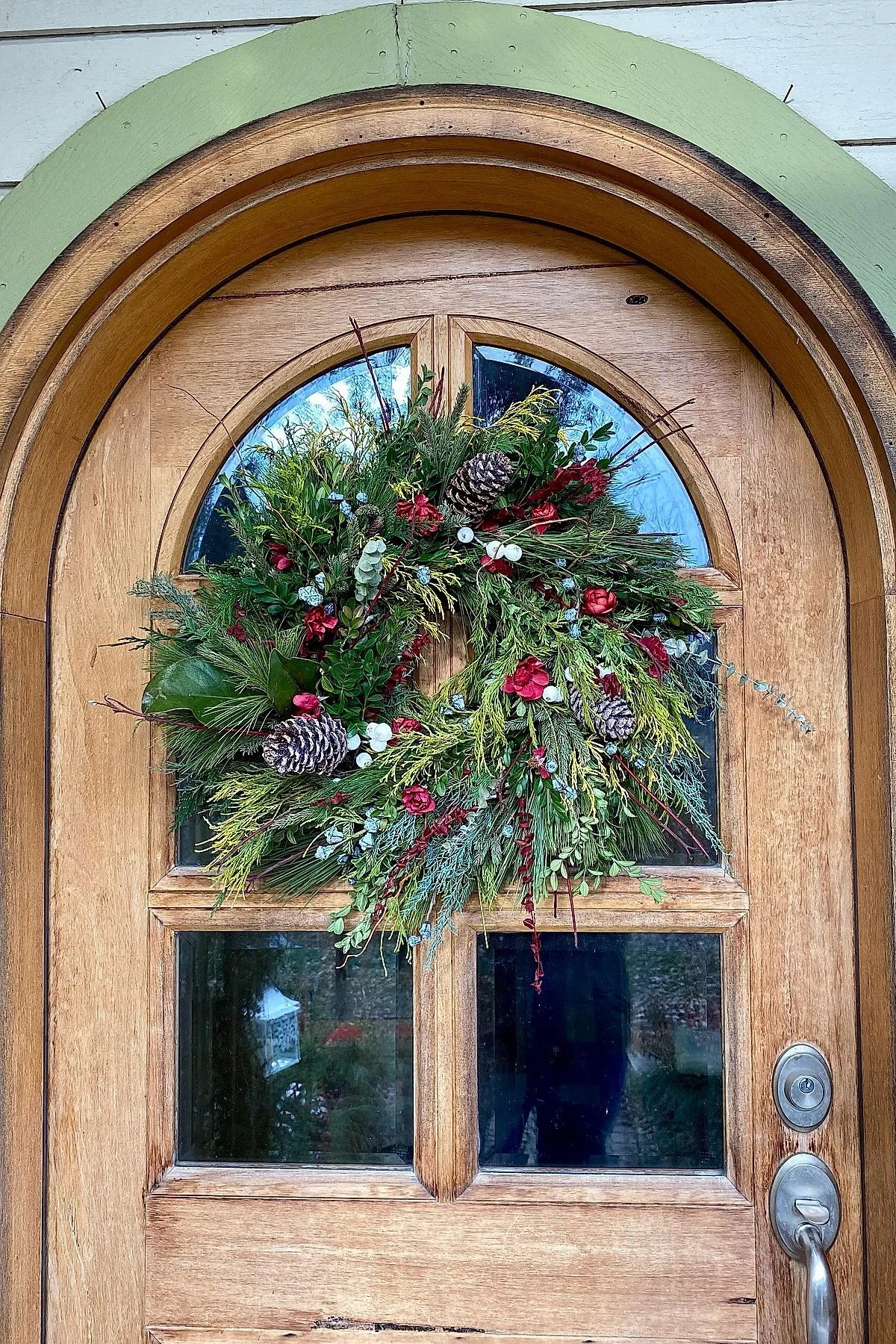
A Victorian home can take an elaborate wreath with rich colors, multiple textures, and embellishments.
For Colonial or Georgian homes, choose a traditional, symmetrical wreath in classic colors. A Craftsman bungalow works well with natural materials and an understated style.
Modern and contemporary homes suit wreaths with clean lines, innovative materials, and geometric shapes. A monochromatic palette or unexpected color combinations can also fit these styles.
Rustic textures and natural elements give a farmhouse wreath its handmade appearance. The wreath should keep that informal, handmade quality.
Last modified: March 20, 2024