Blue gray cabinetry brings color and personality to the kitchen while staying calm, grounded, and easy to live with. From soft, airy shades to deeper stormy tones, the right balance of light, hardware, wood, stone, and tile can shift the room from relaxed and classic to polished and dramatic.
Blue Gray Kitchen Cabinets

Blue gray cabinets avoid novelty, so they can bring more personality without feeling tied to a passing moment. The color reads as steady and supports long-term use while still adding color.
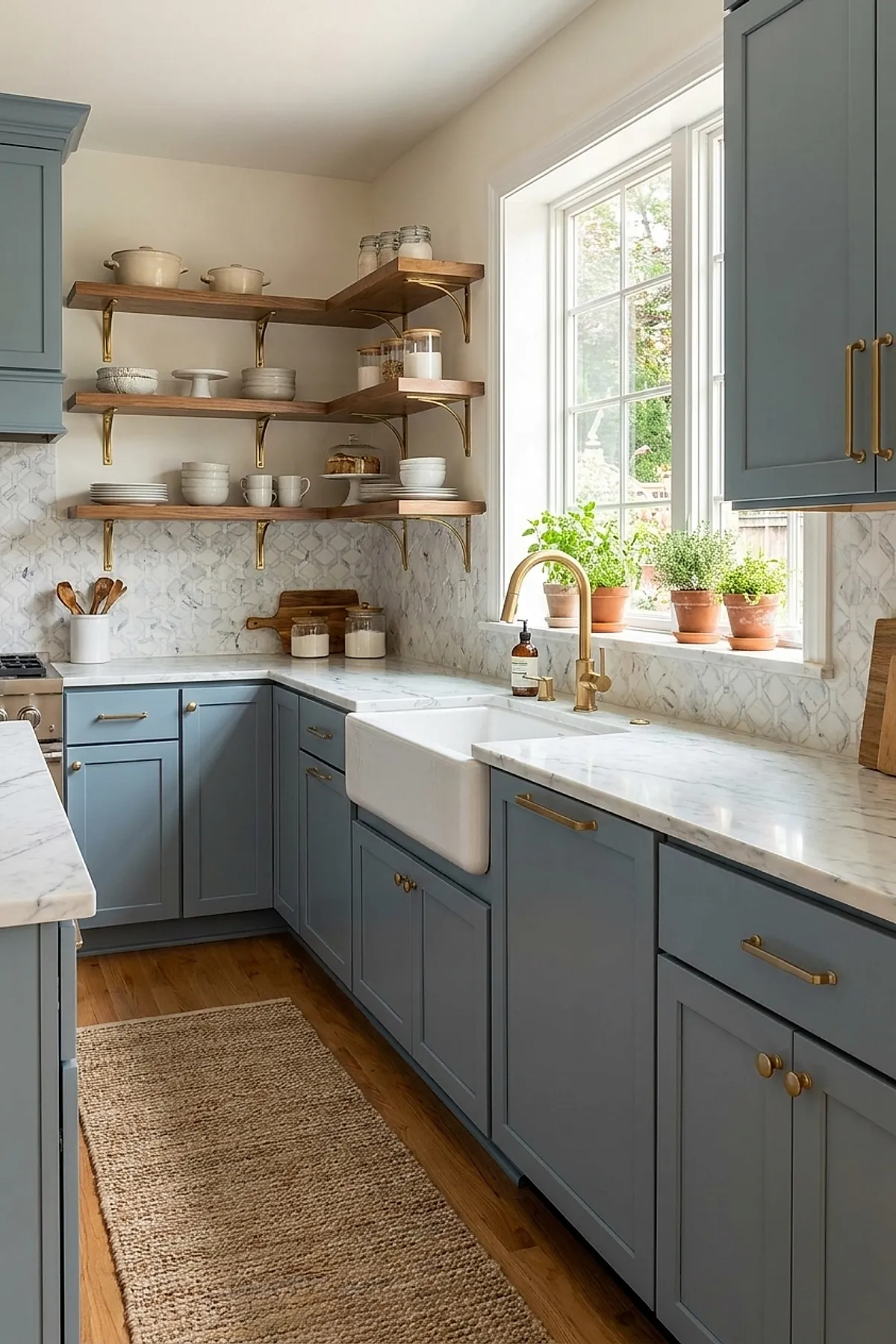
Wood and open shelving give blue gray cabinets a relaxed style. With sharp lines and dark hardware, the same cabinets move toward a contemporary look. Blue gray also pairs with brass and marble for a more tailored style, which is why it suits multiple styles.
The blue brings a calm, stable feeling. Gray keeps it grounded, making the color less sweet and less decorative.
Blue gray cabinetry avoids visual dominance, but it does not have to stay quiet. Adjust the contrast around it to change its presence and support more visual interest.
Blue gray occupies the middle ground between plain gray, which can feel flat, and a stronger blue, which can feel too specific. Balanced blue gray brings together boldness and safety.
Blue gray cabinetry adds shape, depth, and distinctiveness while keeping a restrained palette.
Cream accents and wood can keep the palette warm and neutral, while beige cabinet choices also fit that direction. Blue can instead create a warm vintage cottage or French country kitchen, and navy and white take it toward a fresh modern style.
Choosing a Blue Gray Cabinet Shade
Blue gray shades vary in appearance, especially across full cabinet runs. Some look inky, while others are soft and cloudy; still others lean slate-like or stormy.
Green undertones make blue gray softer and more organic, while steel and violet undertones make it dressier and cooler. Study the undertone before choosing a shade.
Lighter blue gray shades are an easier starting point in small kitchens or rooms with limited daylight. They maintain an airy palette while adding a misty color shift.
In a larger kitchen or a room with generous windows, richer blue gray can give the cabinetry an architectural, confident feel. Deeper blue gray tones, however, need more intention.
Paint colors should be sampled because the installed appearance may differ from the way the swatch looks. The countertop, flooring, and wall color already in place can make the shade appear cooler, grayer, or bluer.
Lighter blue grays tend to be soft, while deeper blue grays are more saturated. Benjamin Moore Cloudy Sky and Hale Navy are recommended for the blue gray family, but test multiple blue grays side by side.
Cabinet Pairings With Countertops Hardware and Materials
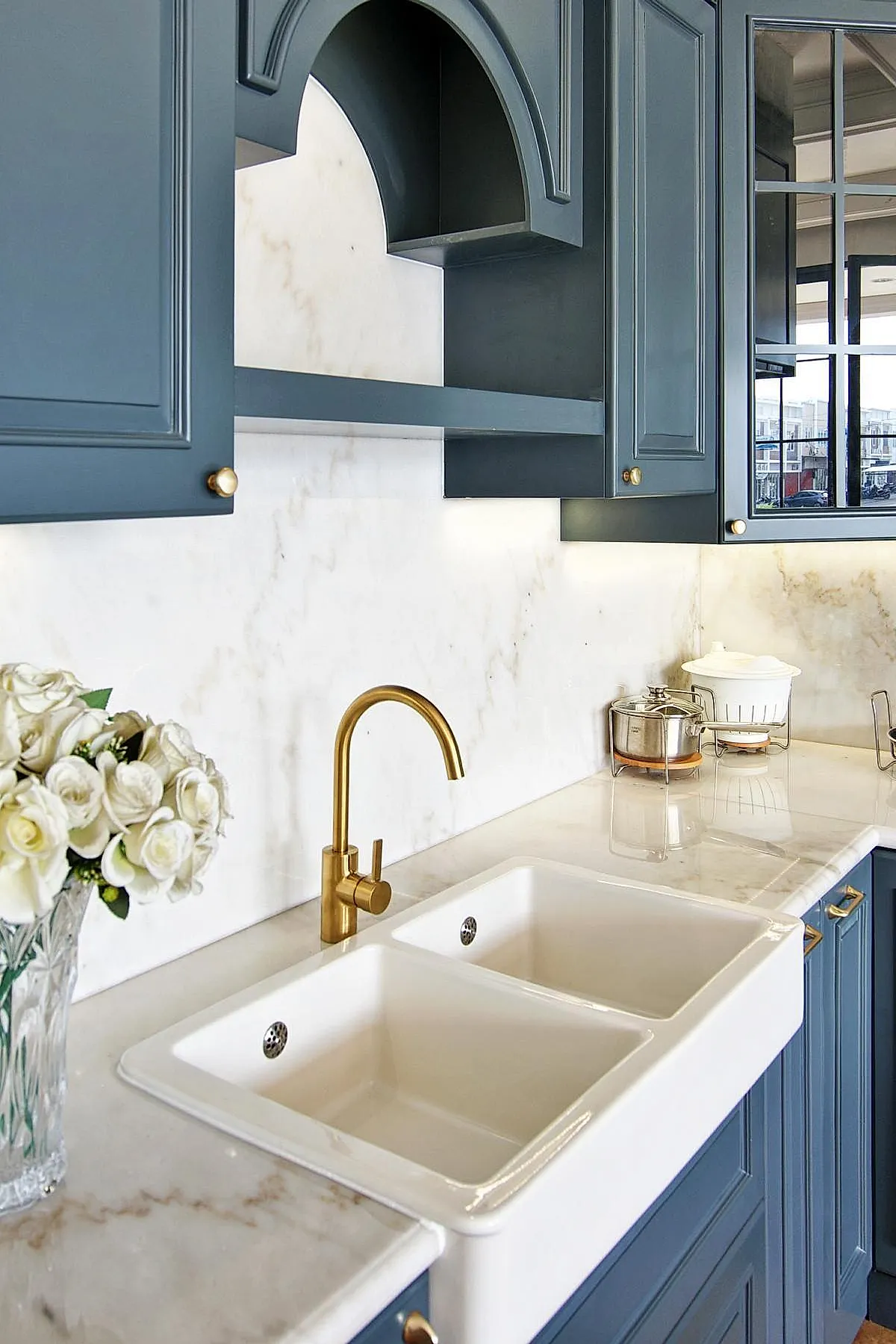
Supporting materials influence the kitchen’s direction, even though blue gray allows for flexible styling. Coordinate those materials so they clarify the design direction.
Brass hardware makes blue gray feel warmer and supports a collected appearance, especially with a soft or dusty blue gray.
Polished nickel or chrome occupies a middle ground, supporting classic style without a trendy appearance. Matte black hardware points to a cleaner, more graphic direction.
Gray stone countertops create a tonal look and support an understated style with blue gray cabinetry. White quartz and white marble make the cabinetry feel brighter and crisper.
Oak or walnut can show up in stools, open shelves, island details, or flooring. These wood tones support a livable, relaxed kitchen and prevent the palette from feeling chilly.
A backsplash with simple tile, subtle veining, or restrained texture gives the cabinets more visual room. The backsplash should support the cabinets rather than compete with them, so a busy pattern is less supportive.
Lighting and Finish for Blue Gray Cabinets
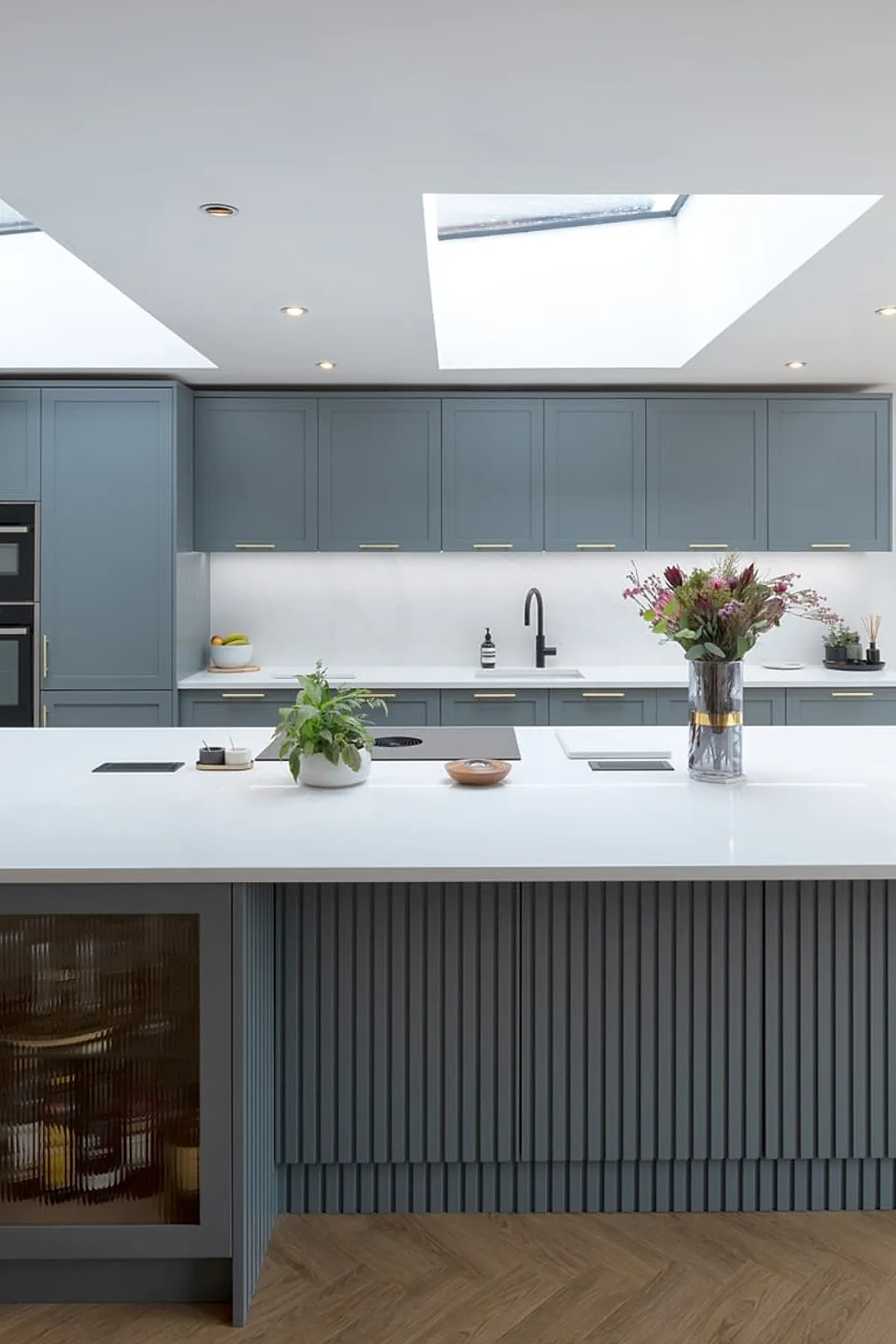
In a bright south-facing room, blue gray can look airy, while soft or indirect light can make it appear cooler. Test the color in the actual room.
Morning light can make blue gray look elegant, while warm bulbs at night may make it moodier. The lighting shift is not always a problem.
Glossier finishes reflect more light and sharpen material contrast. Matte and soft satin finishes make the palette feel muted and modern.
The floor, backsplash tile, wall paint, and nearby trim can all change how blue gray looks. Fixed elements may make it appear brighter, cooler, warmer, or flatter.
Warm flooring and creamy counters can balance a cooler blue gray in a kitchen with cool surfaces. That added warmth helps prevent the room from feeling severe.
Blue gray kitchens can feel cool and calming, or they can become bold, dramatic, and high contrast. Choose the desired mood.
Timeless Blue Gray Kitchen Cabinetry

A kitchen design benefits from restraint. A few selected details are more effective than too many finishes, statement lights, and accent colors.
A coordinated palette does not require perfect matching, but it should feel deliberate. Repeat metal, wood, stone, and textile choices to create a connected room.
Blue gray cabinetry is forgiving while still providing a distinctive color. It remains neutral enough to support future style updates.
When the room’s light, materials, and desired atmosphere suit the blue gray shade, the result can feel polished and calm without chasing trends.
Blue gray supports modern, classic, dramatic, and soft styles while integrating with the rest of the home.