Cottage gardens are beautiful because they do not depend on perfectly trimmed edges or rigid color schemes. Their charm comes from a relaxed blend of plants that follows a more natural rhythm.
Practical and pretty elements come together to create a space that feels as though it developed over time. Whether your garden fills a large yard or a small urban plot, this guide will help bring the cottage garden style to life.
Curved Paths in a Cottage Garden
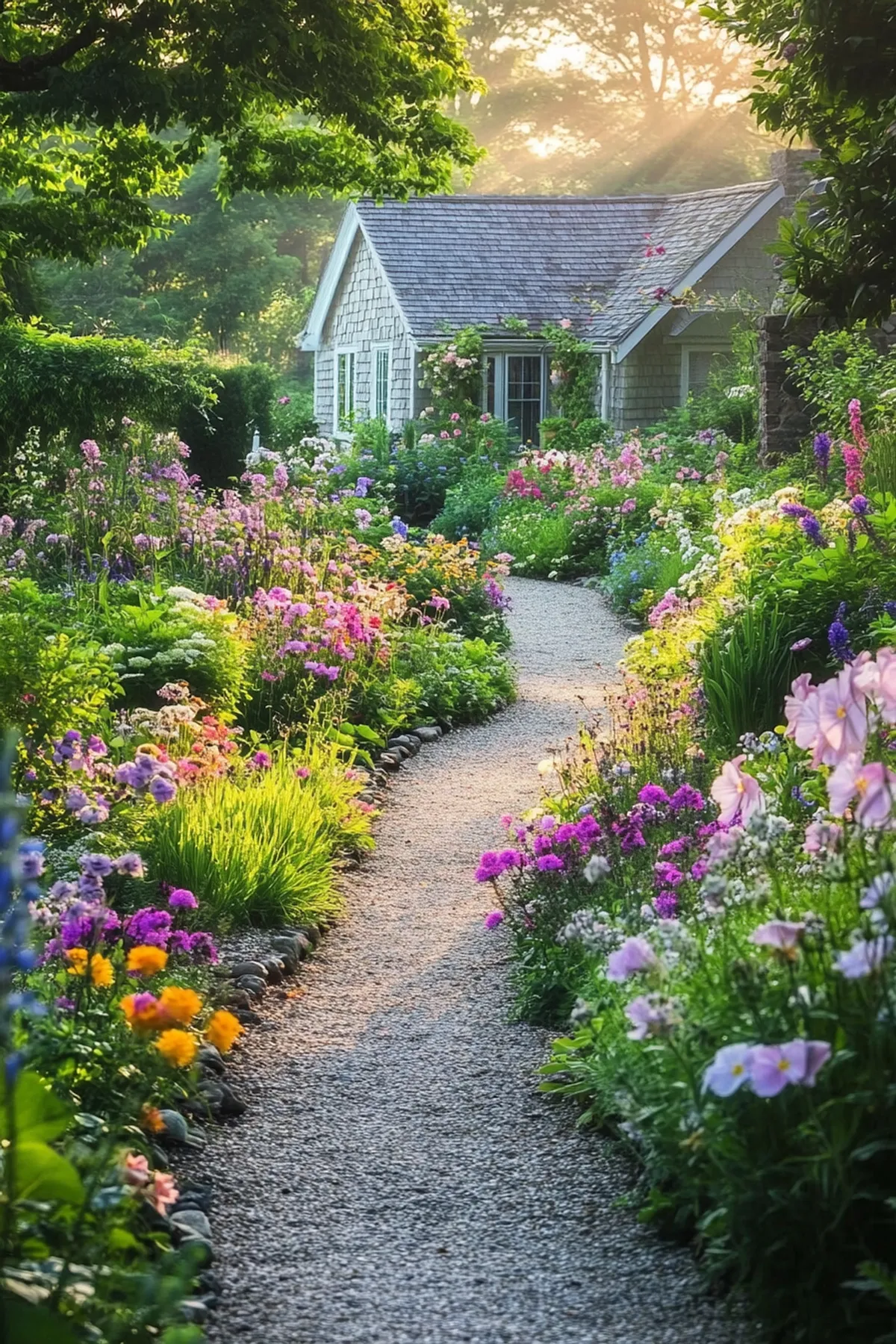
Winding paths with organic shapes invite exploration and discovery. Cottage gardens are better suited to these flowing lines than to straight paths or rigid geometry.
Cottage Garden Stone and Brick Paths
Along the garden, pathways can combine flagstone, pea gravel, and aged brick. These materials give the path a varied, grounded look.
Curved pathways create garden rooms and secret nooks, making small gardens feel like places built for adventure. The flowing pathway design also makes the garden feel larger and more connected.
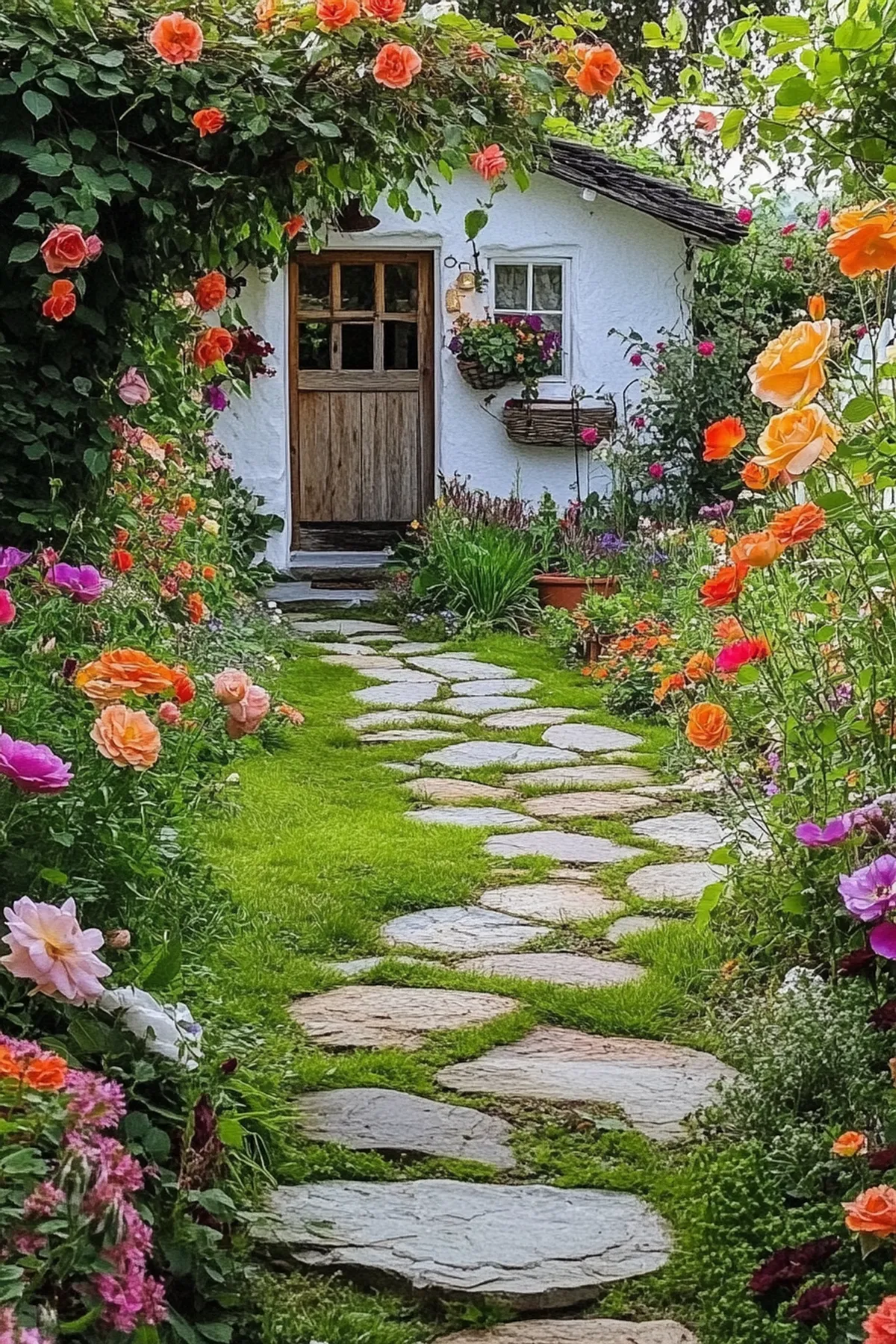
In a cottage garden, stone pathways guide visitors past dense plantings and along colorful borders. Stepping stones placed across gravel or lawn give the route a relaxed, informal feel instead of the strict look of overly structured paths.
A winding stone path can create a cozy, enclosed feeling when arches, low walls, and greenery frame the walkway. The framing makes the path feel tucked away, while the winding route adds discovery.
Quiet spots along a garden path support viewing and invite sitting. A seating area gives visitors a place to pause and enjoy the flowers as the cottage garden paths lead toward these quieter places.
Along curving paths, let layered flowers border the walkway and spill toward it. The plants create a full, lush appearance and make the garden feel soft and immersive.
Lavender and other fragrant perennials at the path edges add color and scent. Brick paths provide a sturdy surface while bringing warmth and character to the cottage garden.
Simple pavers can connect the house with different garden spaces, while stone walkways help create a unified setting. Grass or groundcover can fill the spaces between the pavers, keeping the pathway practical and helping it blend naturally with the garden.
Full Layered Planting
Layered planting creates the sense of abundance found in a cottage garden. Plants are arranged in overlapping levels so the garden feels full rather than bare.
Short plants go at the edges, followed by mid-height plants in the middle layers. Tall plants belong at the back and around focal points, so the planting is arranged by increasing height.
Initial planting may look sparse, but young plants can grow into lush, full specimens and create the fullness of a cottage garden. Leave adequate spacing so the plants have room to grow.
Low-Maintenance Gardens with Native Perennials
Native perennials are adapted to the local climate and can require less maintenance than non-native varieties. Native plants also provide a foundation for a cottage garden.
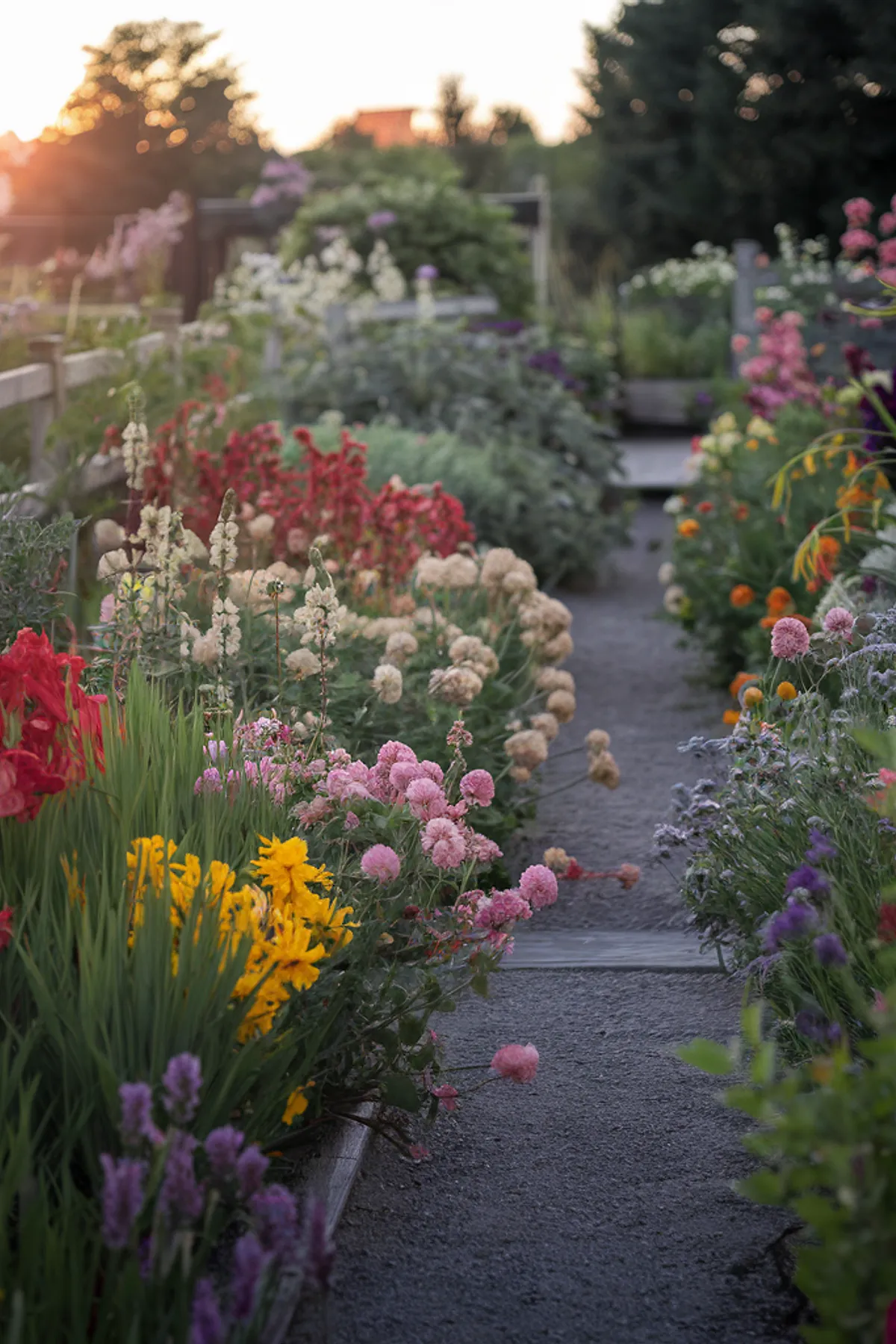
Native plants can bring color to the garden throughout the year while attracting local wildlife, including bees and butterflies.
A wildflower mix can be matched to the local area, then left to grow and spread naturally. Choose a native mix for natural growth that creates a vibrant, carefree garden.
Cottage Garden Gates, Trellises and Vines
Trellises support upward plant growth and provide vertical interest. They are a useful cottage garden element when planting needs to extend above the ground.

For vine support, use a trellis or garden tower, where clematis, sweet peas, and roses can be trained along the structure. These vertical elements add texture and can make a garden feel fuller, especially in smaller spaces.
Cottage Garden Accents
In a cottage garden, decorative accents add personality and charm. Small additions can give the setting a more individual feel.

Bird baths, benches, antique garden carts, and other unique finds can serve as focal points. These garden accents complement a natural, casual outdoor setting.
Rustic Wood and White Picket Fences with Cottage Garden Gates
In a cottage garden, the fence and gate work together as simple boundaries.

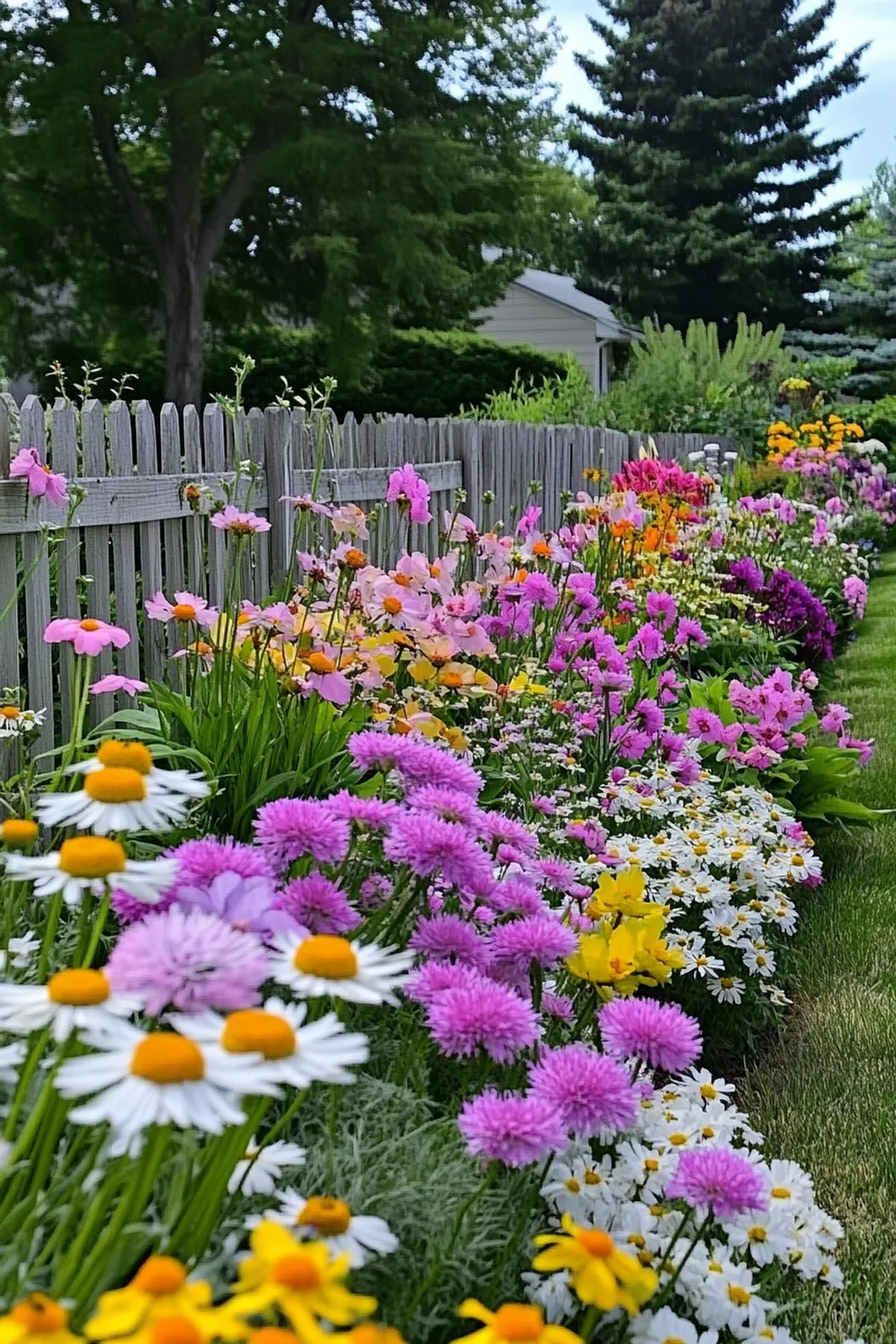
Along the rustic wood fence, plant daisies with mixed blooms in a loose, layered border. This loose border creates the relaxed look of cottage garden style.
Uneven spacing lets the plants spill and mingle instead of growing in a rigid pattern. That looser arrangement supports a sense of natural abundance.
A classic white picket fence makes a garden backdrop for poppies, daisies, and foxgloves, so fill the fence setting with flowers.
In the border, mix plants at different heights rather than keeping everything level. The varied heights create a lively border and help it look full and overflowing.
Soft pink roses rise tall in the background, adding both height and romance. Soft purple lavender pairs with the roses along the edge, where it forms a fragrant border.
Small flowers fill the front of the bed, while medium lavender perennials and tall roses are layered by height in the fence border. This arrangement creates depth.
Climbing roses frame a simple picket gate and can be planted around it. The planting softens the gate’s structure and helps it integrate with the landscape.
Boulder Rock Features
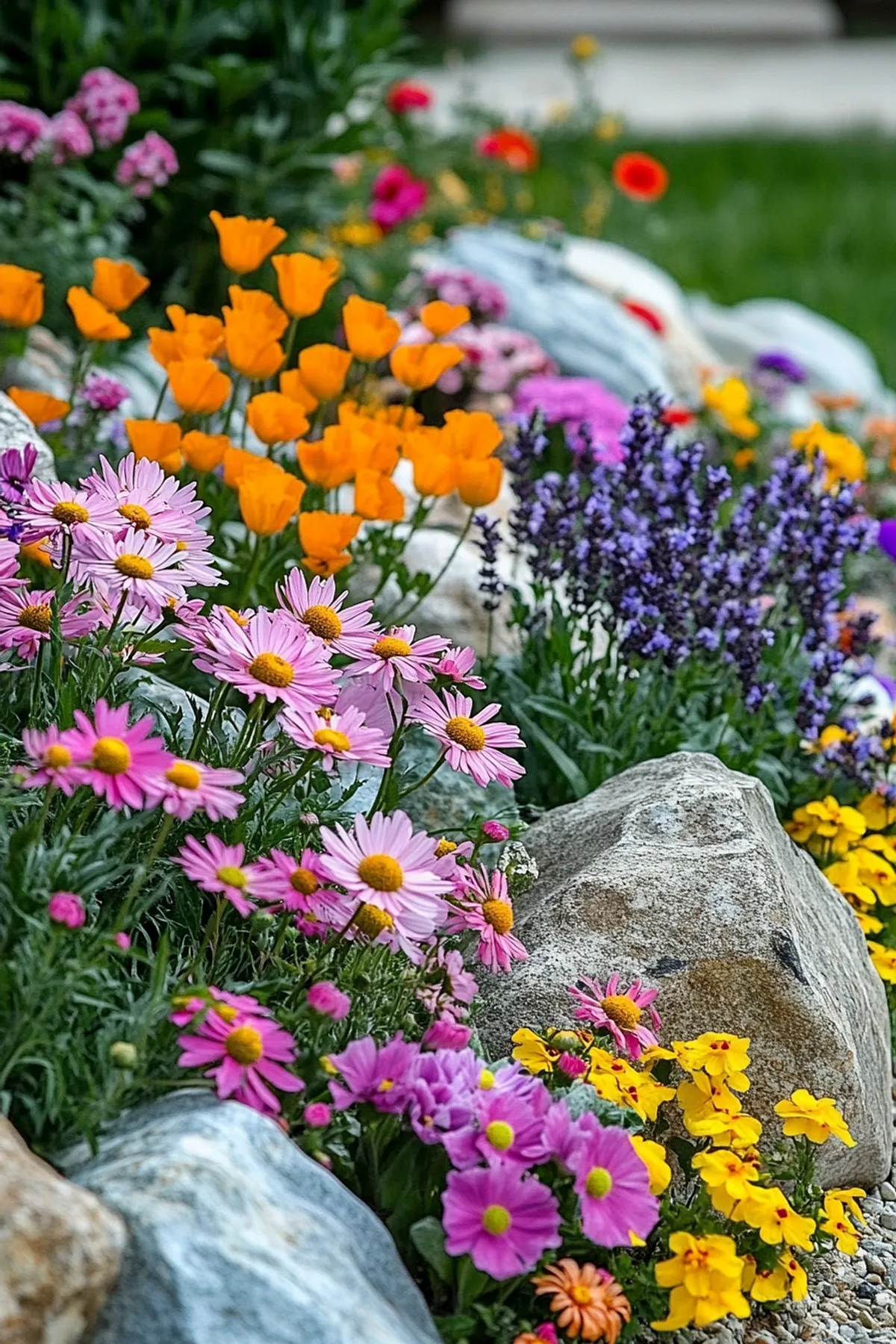
Rocks and boulders add texture and a natural feel while forming planting-bed borders, defining paths, or standing alone as features. Use them for path definition as well as around garden beds.
Over time, moss and creeping plants can grow over the rocks, integrating them more fully into the landscape.
Natural Growth Cottage Garden Style

In a cottage garden, plants grow freely rather than according to an idea of perfection. That free growth defines the garden’s cottage character.
Over time, the garden gradually develops a somewhat wild, less controlled appearance as the planting grows.
Plants can be left to intermingle and spill over one another. This creates an abundant planting with an untamed appearance.
Last modified: February 7, 2024